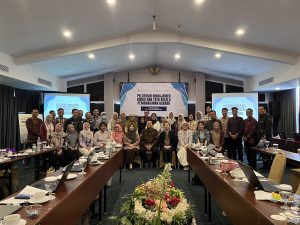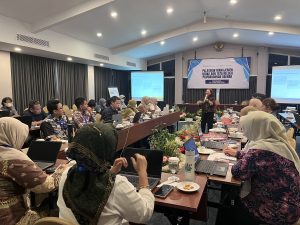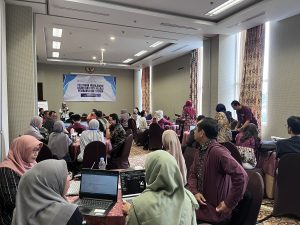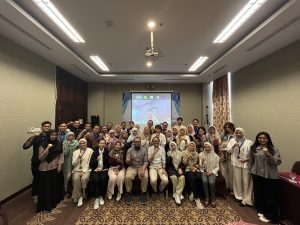
Yogyakarta, October 28, 2026 – The Ministry of National Development Planning/National Development Planning Agency (Bappenas), in collaboration with the Master’s Program in Urban and Regional Planning (MPWK), Faculty of Engineering, Universitas Gadjah Mada (UGM), organized a Risk Management and Regional Development Governance Training Program from October 22 to 28, 2026. The five-day program combined online sessions conducted via Zoom Meeting with in-person activities in Yogyakarta. This initiative aimed to strengthen participants’ capacity and understanding of risk management implementation in regional planning, particularly in supporting more effective, well-directed, and accountable development governance.
The training program was attended by a total of 31 participants representing four regencies and cities that received the 2025 Regional Development Award (Penghargaan Pembangunan Daerah/PPD), namely Bantul Regency, Temanggung Regency, Magelang City, and Muara Enim Regency. The training covered various topics and practical exercises, including national planning and budgeting policies, alternative sources of regional development financing, the integration of risk management into national development processes, and the regulatory framework of National Development Risk Management (Manajemen Risiko Pembangunan Nasional/MRPN). Participants also explored best practices in MRPN implementation, integrated assurance, risk profile development, and negotiation skills necessary to facilitate effective risk management processes.
All training materials were based on the Implementation Guidelines of the Secretary of the Ministry of National Development Planning/Secretary-General of Bappenas Number 2/JUKLAK/SESMEN/12/2025. This ensured that the materials and practical exercises were aligned with the established MRPN policy framework. The learning process was further enriched through case studies, including risk analysis of various development programs in participants’ respective regions and project profile development simulations using the logical framework approach. In the final stage, participants practiced formulating risk appetite statements and identifying risk profiles for MRPN-related projects as part of the practical application of the knowledge acquired.
Through this program, participants were expected not only to gain a conceptual understanding of risk management but also to develop the ability to identify, analyze, and formulate appropriate risk mitigation measures within the context of regional development. This capacity-building initiative is intended to improve development planning and implementation by taking various potential uncertainties into account, while enhancing the quality of decision-making and the achievement of regional development objectives.
As the final outcome of the training, participants worked in groups to develop Risk Profiles for Regional Government Organizations, along with risk mitigation matrices for priority programs that can be integrated into regional planning and budgeting documents. These documents were presented to other groups and trainers for discussion, allowing participants to receive feedback for further refinement. Beyond demonstrating their ability to apply the training materials, these outputs are expected to serve as practical references that can be utilized within their respective regional government institutions.