
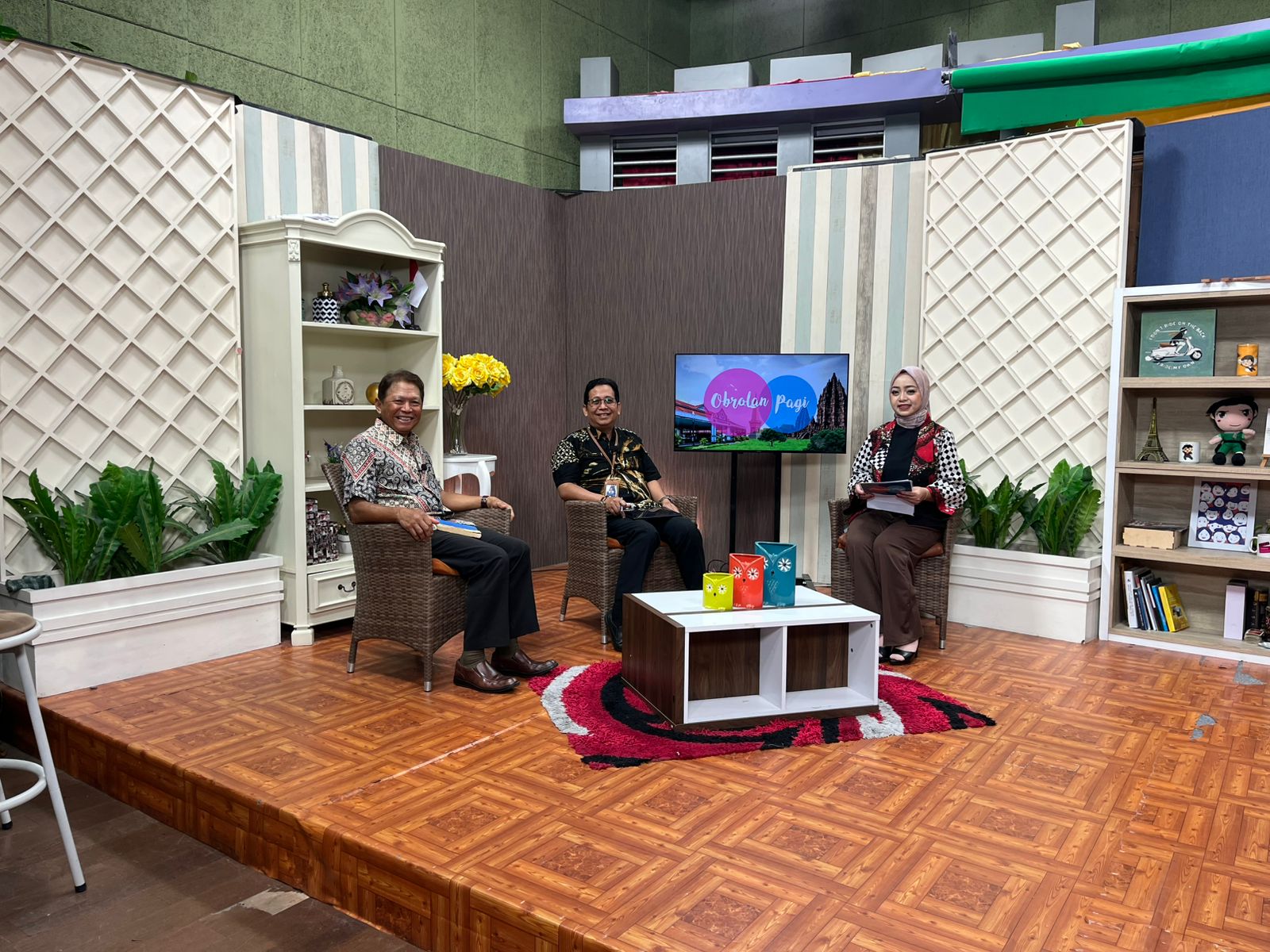
Prof. Ir. Bakti Setiawan, M.A., Ph.D., widely known as Prof. Bobi, an academic in Urban and Regional Planning at the Faculty of Engineering, Universitas Gadjah Mada, served as a speaker in the talkshow “Ruang-Ruang yang Menginspirasi” on Thursday, 18 December 2025. The event was held at the RBTV Jogja Studio, Universitas AMIKOM Yogyakarta. The talkshow provided a public forum to discuss spatial planning issues and the development of strategic areas in the Special Region of Yogyakarta.
The discussion focused on the role of Strategic Spatial Units (Satuan Ruang Strategis/SRS) in preserving and strengthening the distinctiveness of Yogyakarta, particularly from a regional planning perspective. SRS were positioned as important instruments that integrate philosophical, historical, customary, social, and environmental aspects in spatial management. This approach underscores the importance of aligning cultural values with regional development needs.
In addition, the discussion highlighted various challenges in implementing SRS development in Yogyakarta. These challenges include ensuring consistency between normative planning frameworks, public policies, and on-the-ground implementation. Cross-sectoral coordination and sustainable area management were identified as key aspects that require attention to ensure that SRS development aligns with prevailing policies.
The talkshow also emphasized the role of the book “Ruang-Ruang yang Menginspirasi: Portrait of Five Strategic Spatial Units in Yogyakarta” as a medium for public communication. The book is expected to bridge planning documents and policy frameworks with the needs and dynamics of communities in strategic urban areas. Through the presentation of area profiles, the book provides an overview of existing conditions as well as the progress of development in the five SRS in Yogyakarta.
The discussion aligns with the achievement of the Sustainable Development Goals (SDGs). The development of SRS supports SDG 11 (Sustainable Cities and Communities) through inclusive and environmentally conscious spatial planning, SDG 8 (Decent Work and Economic Growth) by strengthening area-based potentials rooted in cultural assets and community activities, and SDG 17 (Partnerships for the Goals) through collaboration among local government, academia, and the media. Through this approach, SRS development is expected to contribute to integrated and sustainable regional development in Yogyakarta.
Reported by Rindi Dwi Cahyati