
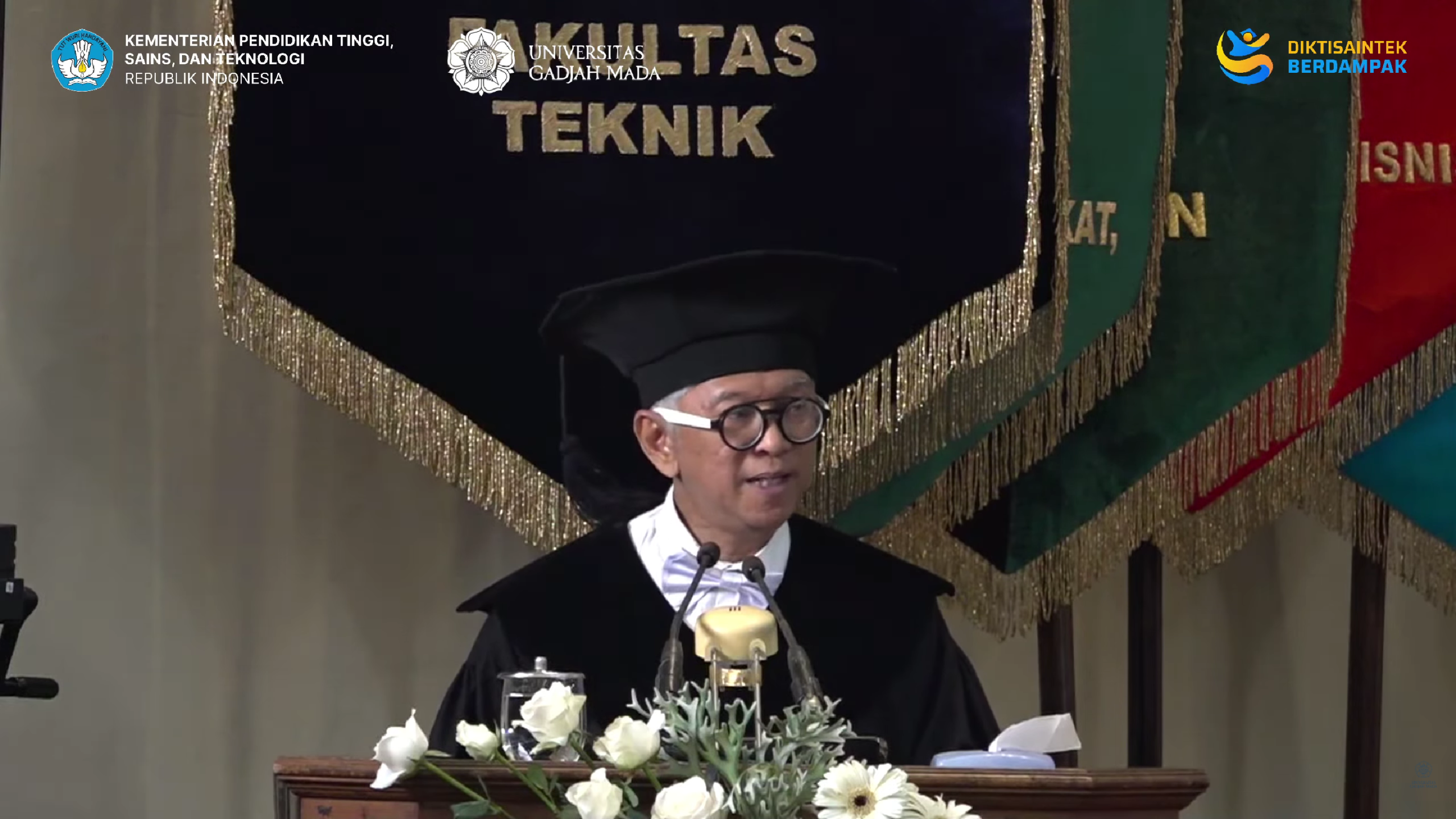
Prof. Ir. Ikaputra, M.Eng., Ph.D., a lecturer at the Department of Architecture and Planning (DTAP), Faculty of Engineering, Universitas Gadjah Mada (UGM), was officially inaugurated as a Professor of Universitas Gadjah Mada on Thursday (June 4) at the UGM Senate Hall. During the inauguration ceremony, Prof. Ikaputra received the Professor’s ceremonial sash from the Chair of the UGM Board of Professors, accompanied by the Chair of the UGM Academic Senate and the Vice Dean for Academic and Student Affairs of the Faculty of Engineering.
This inauguration marks the highest academic achievement in a lecturer’s career. Prof. Ikaputra is now one of 544 active professors at Universitas Gadjah Mada. Within the Faculty of Engineering, he is among 86 active professors out of a total of 112 professors.
In his inaugural speech, titled “The Marginalization of Urban Heritage Architecture,” Prof. Ikaputra addressed the growing challenges faced by urban cultural heritage amid rapid development, urbanization, and globalization. He explained that the term “heritage” is used to help the public better understand cultural assets that possess significant value and therefore deserve protection and preservation.
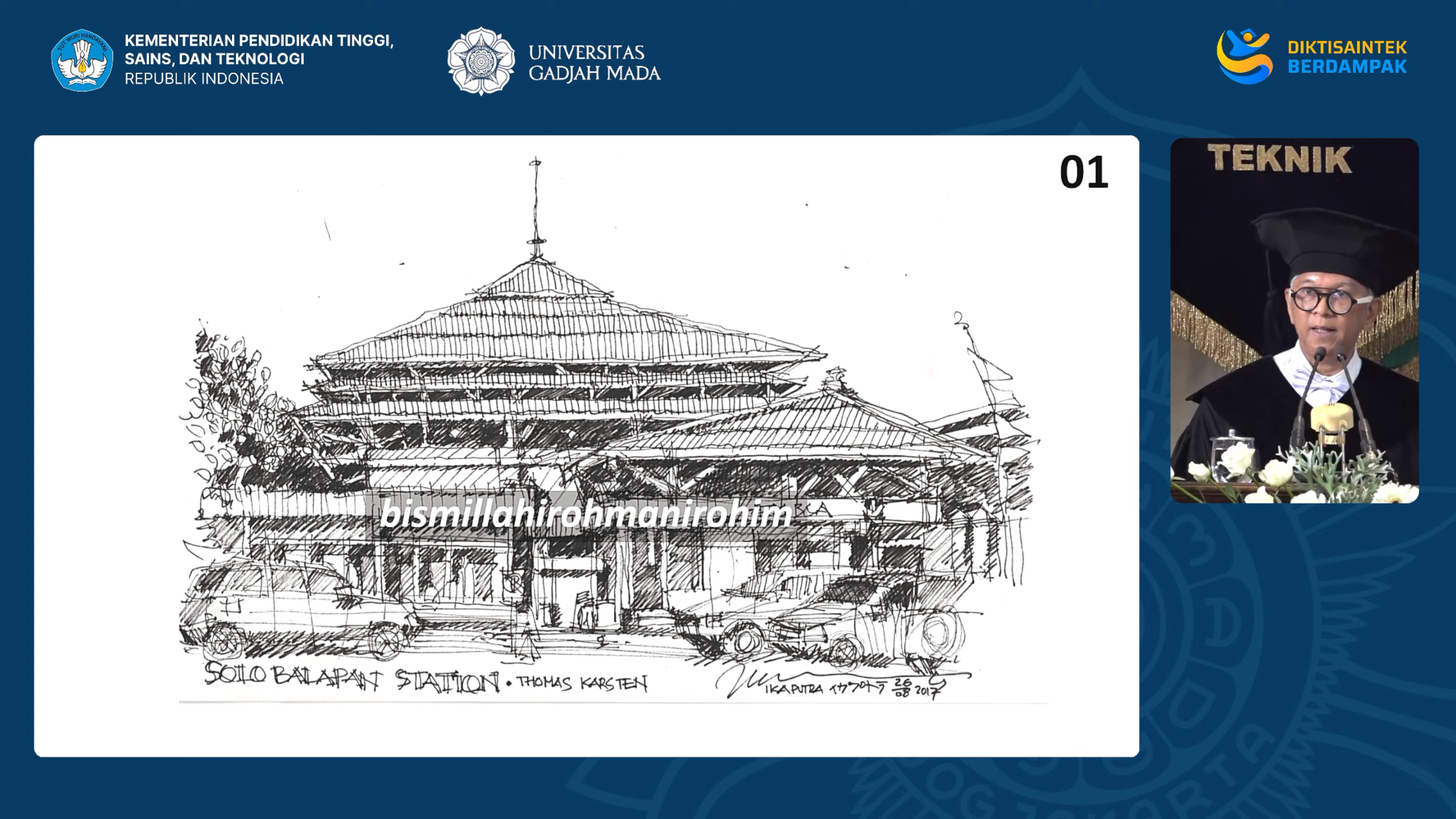
Prof. Ikaputra emphasized Indonesia’s rich and diverse heritage resources, ranging from internationally recognized natural heritage sites to cultural landscapes and historic urban areas. In the urban context, heritage is not limited to individual buildings or monuments; it also encompasses landscapes, spatial structures, and cultural values that shape a city’s identity. Historic areas such as Yogyakarta Old Town, Surabaya Old Town, Lasem Old Town, Batavia Old Town, and the Yogyakarta Philosophical Axis are examples of urban heritage sites with important historical and cultural significance.
However, according to Prof. Ikaputra, the preservation of urban heritage continues to face numerous challenges. Deterioration caused by aging structures, natural disasters, population growth, and infrastructure development often threatens the sustainability of historic areas. He cited several examples, including physical alterations to historic districts due to road widening projects, the loss of historic railway assets, and the marginalization of heritage towns located in remote areas because of limited funding and development attention.
Prof. Ikaputra further explained that heritage marginalization is also reflected in unequal levels of protection and recognition. Monumental buildings and prominent heritage sites often receive greater attention and conservation efforts, while smaller and less prominent historic structures are frequently overlooked or even demolished. This imbalance risks eroding local identities and reducing the diversity of urban character across Indonesian cities.
In the concluding part of his speech, Prof. Ikaputra stressed the importance of adopting a sustainable approach to urban heritage preservation. He argued that preservation should not be viewed merely as an effort to protect the past, but rather as an integral component of urban development strategies that respond to future challenges, including climate change and the transition toward low-carbon development. Initiatives such as the low-emission zone in Malioboro and environmentally friendly revitalization programs in historic districts demonstrate that heritage conservation can go hand in hand with sustainable development goals.
Prof. Ikaputra’s inauguration as a Professor further strengthens the contribution of DTAP FT UGM to the advancement of architectural knowledge, heritage conservation, and sustainable urban planning. The ideas presented in his inaugural speech are closely aligned with the Sustainable Development Goals (SDGs), particularly SDG 11 (Sustainable Cities and Communities) through the preservation of cultural heritage and sustainable urban development; SDG 13 (Climate Action) through the promotion of low-emission development and climate adaptation measures; and SDG 16 (Peace, Justice and Strong Institutions) through the strengthening of governance and the protection of cultural assets as part of society’s collective identity and memory.
Reported by Rindi Dwi Cahyati