
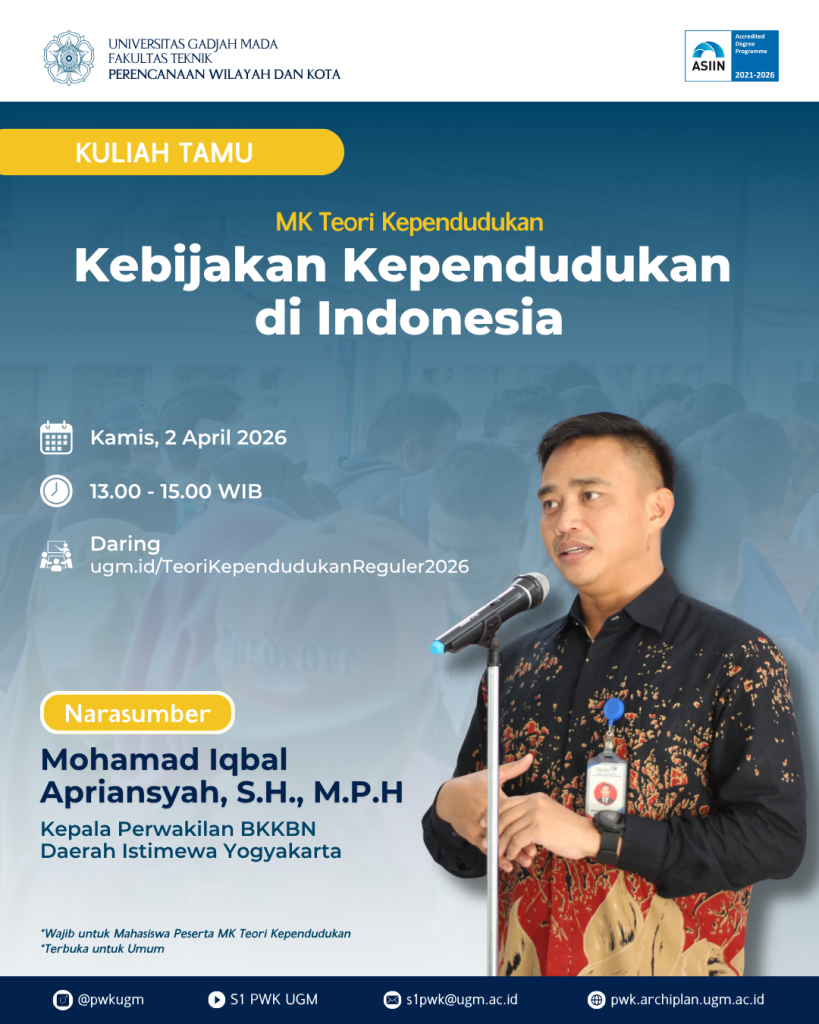
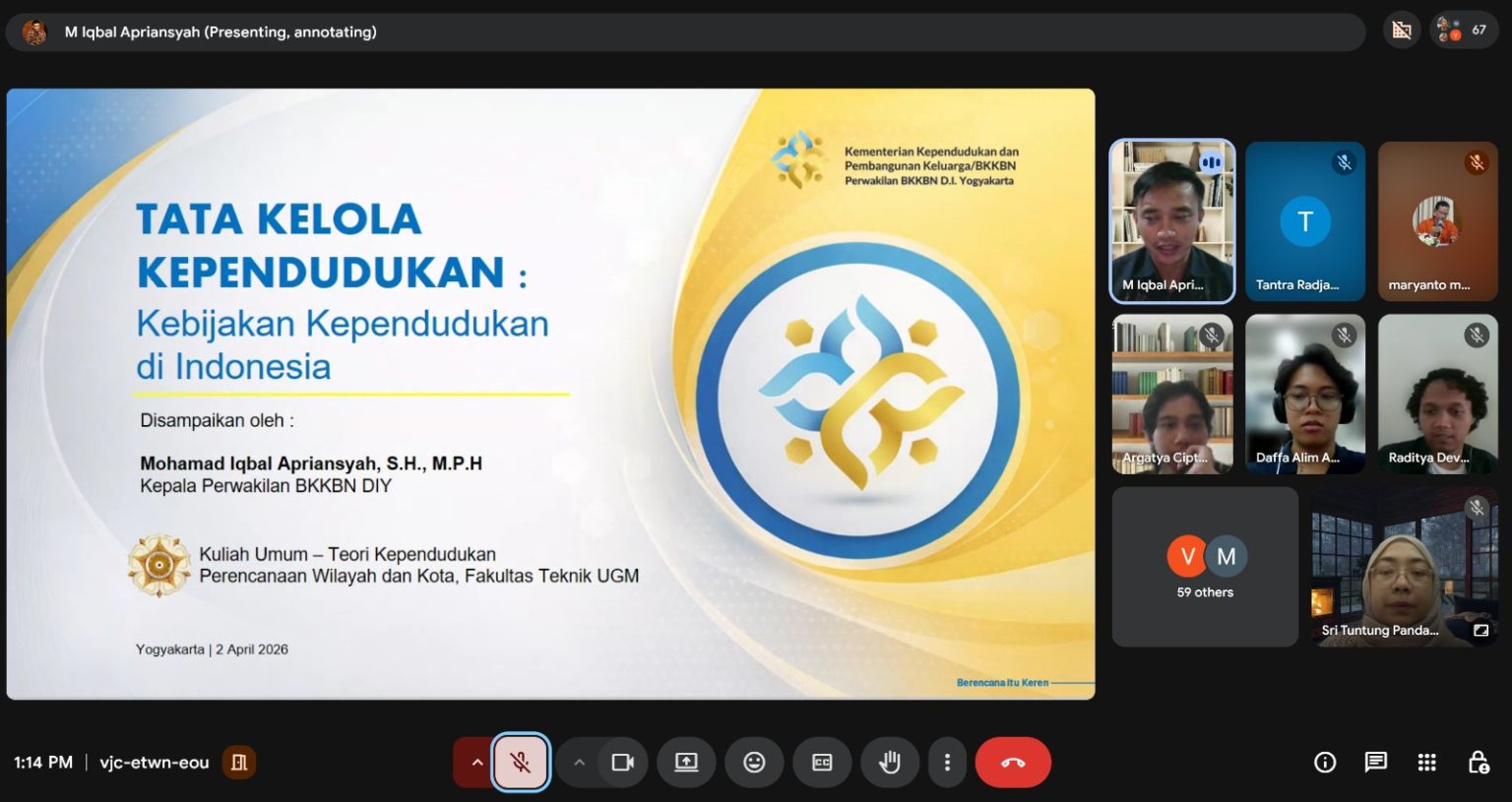
On April 2, 2026, the Urban and Regional Planning Program (PWK) at Universitas Gadjah Mada had the opportunity to explore population issues directly from a practitioner’s perspective. Mohamad Iqbal Apriansyah, S.H., M.P.H., Head of the Representative Office of BKKBN Yogyakarta Special Region, delivered a presentation on Indonesia’s population policy direction amid increasingly complex social dynamics.
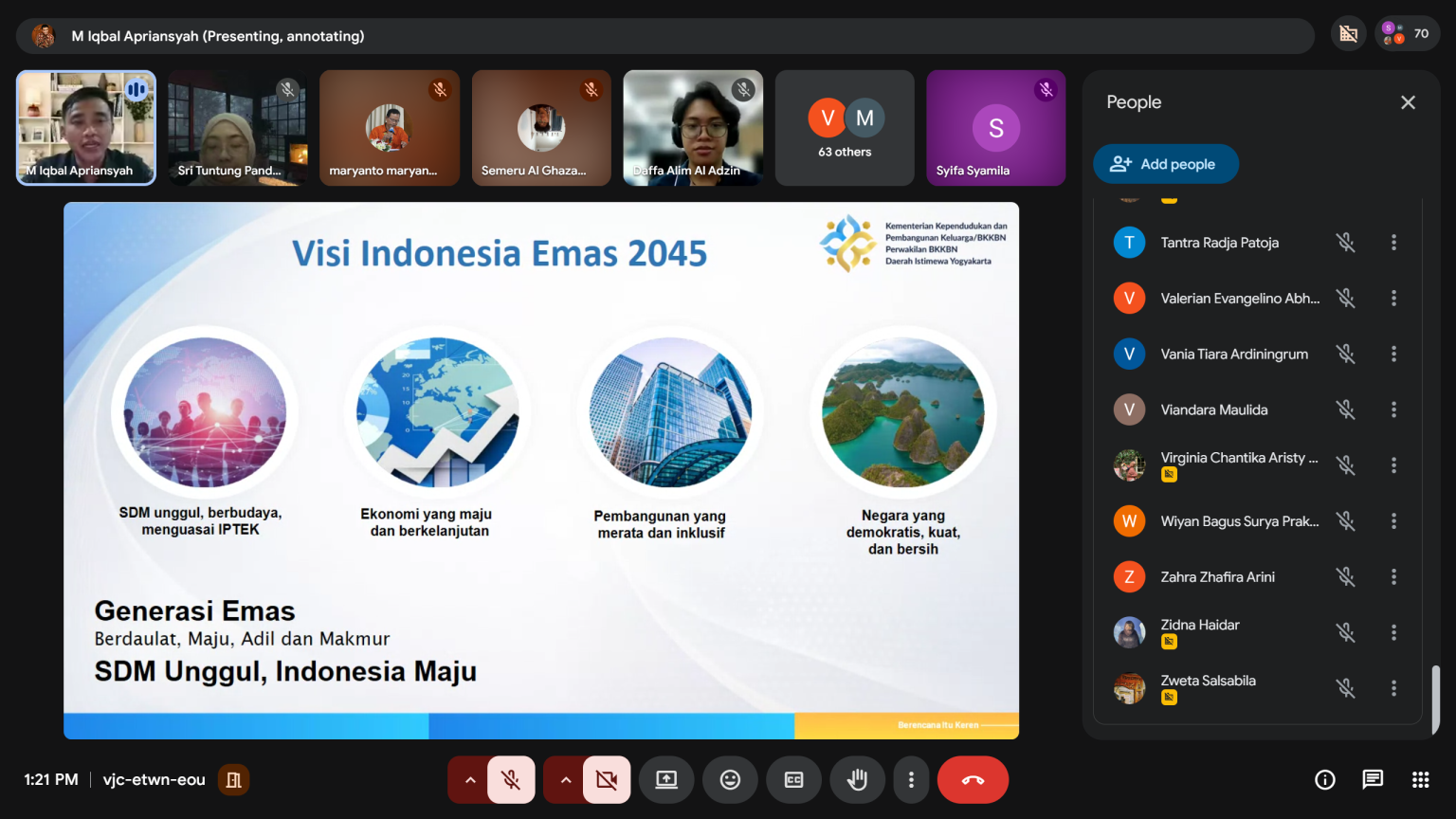
The guest lecture highlighted that spatial planning cannot be separated from demographic conditions and human quality. Mr. Iqbal presented various strategic intervention programs, ranging from the “Genting” (Foster Parents to Prevent Stunting Movement) program, which aims to ensure the quality of future generations, to the “Tamasya” (Child Care Park) program, which supports a standardized child-care ecosystem. In addition, the issue of fatherlessness in Indonesia was addressed through the Gerakan Ayah Teladan Indonesia (GATI), emphasizing the important role of fathers in strengthening family resilience.
One of the key topics discussed was digital transformation in family services through the AI Super Apps Keluarga Sakina. This technology is expected to integrate population data across sectors to support more accurate policy-making. Through this session, students were encouraged to understand that “Berencana itu Keren” (Planning is Cool) is not merely a slogan, but a foundation for inclusive regional development that accommodates all age groups, including older adults through the “Sidaya” (Empowered Elderly) program.
This lecture supports several targets within the Sustainable Development Goals (SDGs). It contributes to SDG 3 (Good Health and Well-being) through efforts to reduce stunting rates and improve reproductive health, as well as SDG 5 (Gender Equality) by strengthening the role of fathers in childcare and supporting working mothers through daycare facilities. Furthermore, the discussion relates to SDG 1 (No Poverty) through strengthening family resilience as a foundation of community economic stability, and SDG 4 (Quality Education) through parenting education and early childhood character development. The activity also supports SDG 10 (Reduced Inequalities) through empowering elderly groups and providing interventions for vulnerable families.
This article is reproduced from:
Author: Jillan Sausan Amira
Editor: Rindi Dwi Cahyati