
Prof. Wiendu Nuryanti delivered a Valedictory Lecture titled “Rekayasa Arsitektur, Budaya, dan Pariwisata” (Engineering Architecture, Culture, and Tourism) on Tuesday (28/7), marking her retirement as a professor. On the same occasion, Prof. Wiendu also launched her book, Borobudur dan Kita. The event was attended by Prof. Wiendu’s colleagues, friends, and family, who gathered to hear the ideas she shared in her farewell lecture.
In her lecture, Prof. Wiendu highlighted the importance of the concept of “rekayasa” within the trilogy of architecture, culture, and tourism as one of the foundations for Indonesia to develop into a global superpower. According to her, the word reka is rooted in the idea of the work of human intellect and wisdom. Within this trilogy, architecture serves as the space or vessel; culture provides meaning, narratives, and legitimacy; while tourism serves as its driving force.
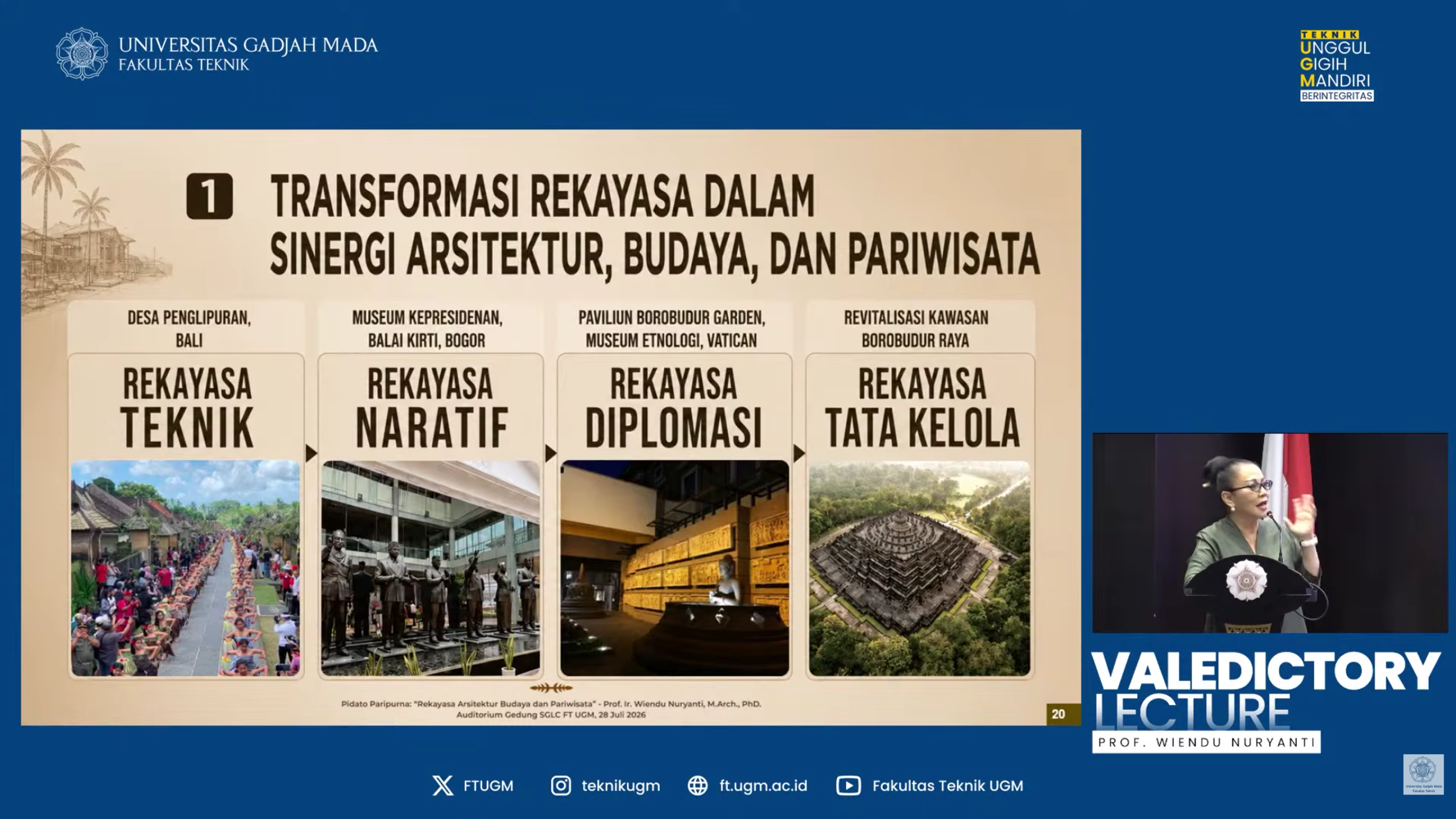
Prof. Wiendu identified at least four forms of rekayasa: technical engineering, narrative engineering, diplomatic engineering, and governance engineering. These four approaches are reflected in various projects and experiences throughout her academic and professional journey.
One example of technical engineering she presented was the development of Penglipuran Village in Bali, which began in 1992. These efforts contributed to the village’s development, eventually leading Penglipuran to receive the Best Tourism Village recognition from the UNWTO in 2023.
Meanwhile, narrative engineering was manifested through the design of the Balai Kirti Presidential Museum in Bogor. Through the museum, the actions, policies, and daily lives of Indonesia’s presidents, each with varying terms in office, are narrated through its spaces and contents. Architecture thus serves not merely as a physical vessel, but also as a medium for conveying Indonesia’s historical journey and presidential leadership.
Another experience shared by Prof. Wiendu was when Indonesia was offered a 1,000-square-meter site in the Vatican to showcase the country’s cultural richness. The opportunity was realized through the Borobudur Garden Pavilion in the Vatican, designed to portray the diversity of religious life and the values of tolerance that characterize Indonesia. This initiative represents an example of diplomatic engineering through culture and architecture.
In terms of governance engineering, Prof. Wiendu shared her experience through the revitalization of the Borobudur Raya area and art village. The project initially faced frequent opposition and demonstrations, but was eventually realized and became a case study for the management and relocation of approximately 4,000 street vendors to more appropriate and dignified facilities.
Prof. Wiendu, who previously served as Deputy Minister of Education and Culture during the administration of President Susilo Bambang Yudhoyono, also emphasized the importance of cultural justice as a foundation for inclusivity. According to her, the development of architecture, culture, and tourism must be grounded in an understanding of cultural contexts and the interests of local communities.
This perspective aligns with Sustainable Development Goal (SDG) 11: Sustainable Cities and Communities, particularly Target 11.4, which emphasizes the importance of protecting and safeguarding the world’s cultural and natural heritage. In this context, architecture is not merely viewed as a physical product, but also as a medium for preserving cultural identity, values, and diversity within inclusive development.
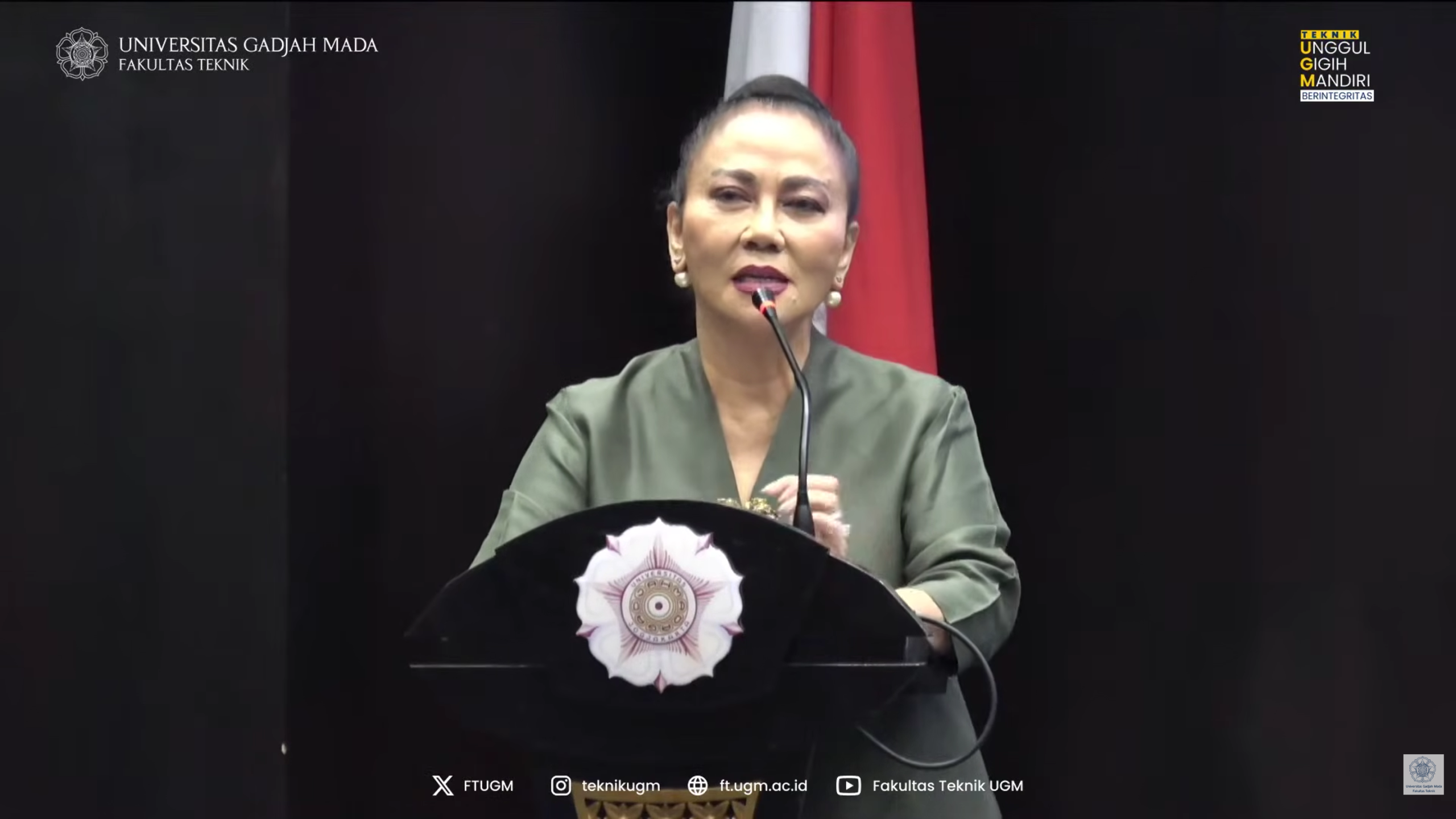
“Architecture is the most legitimate expression of culture. The application of the concept of rekayasa must be rooted in the work of intellect and wisdom, rather than mere cleverness, so that engineering cannot be separated from culture,” said Prof. Wiendu.
She concluded her lecture with a principle that encapsulates the interconnectedness of the three: “No culture, no architecture. No culture, no tourism.”
Reported by Rindi Dwi Cahyati