
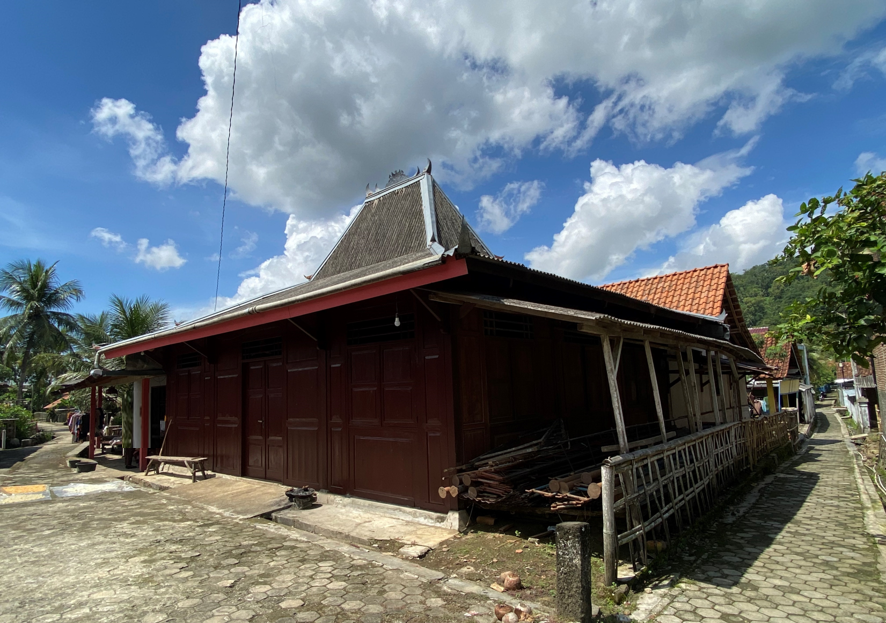
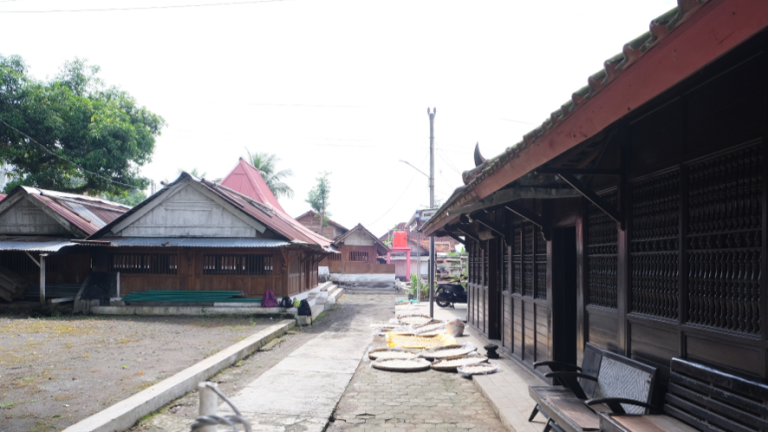
As part of the learning activities in the Research Methodology 2 course, students from the Master of Architecture Program, Faculty of Engineering, Universitas Gadjah Mada (UGM), conducted a field study in several areas of Pekuncen Village, Jatilawang District, Banyumas Regency, Central Java. This activity became an important stage in the field research-based learning process to deepen students’ understanding of the phenomenological approach in architecture and the built environment.
The field study aimed to collect data and information regarding spatial phenomena, building conditions, and cultural practices developed within Pekuncen Village. The observation focused on the relationship between space, social activities, and cultural values embedded in the community. The collected data will serve as the foundation for students’ research assignments in the Research Methodology 2 course.
The activity was conducted from 1–3 May 2026 and involved 31 students from the UGM Master of Architecture Program. The students were divided into several research groups based on study areas and observation objects within Pekuncen Village. The activity was supervised by Prof. Ir. Tarcicius Yoyok Wahyu Subroto, M.Eng., Ph.D., IPU., Prof. Ir. Sudaryono, M.Eng., Ph.D., IPU., and Mario Lodeweik Lionar, S.T., M.Sc., Ph.D. as course instructors. Each group conducted field observations with various research focuses, including settlement spatial characteristics, building typologies, patterns of community interaction, and local cultural expressions that shape the identity of the village space.
Located in an agrarian area with an approximate area of 506.64 hectares, Pekuncen Village has a strong environmental character, marked by the dominance of agricultural land and yards that shape a close relationship between community life and the surrounding natural environment. This distinctive rural landscape provides an important context for understanding the relationship between humans, space, and culture from a phenomenological perspective. Beyond its physical characteristics, Pekuncen Village is also known for preserving ancestral cultural traditions, including the unggahan trah Banokeling ritual. This hereditary tradition is carried out as a form of respect for ancestors and an expression of gratitude from the community. The tradition reflects how cultural values are not only maintained through social practices but also shape the meaning of space and everyday life patterns.
Through this field study, students are expected to develop critical observation skills and contextual understanding of architectural and cultural phenomena within the community. The research outcomes are also expected to provide benefits for Pekuncen Village, both as enrichment material for village profiles, support for cultural tourism promotion, and input for cultural preservation efforts and local potential development based on community wisdom.
The Research Methodology 2 field study in Pekuncen Village contributes to the achievement of SDG 4 (Quality Education) through field research-based learning that equips students with knowledge and skills to support sustainable development, including appreciation of local culture. It also supports SDG 11 (Sustainable Cities and Communities) by strengthening understanding of local spatial and cultural preservation. This activity reflects the commitment of the UGM Master of Architecture Program to promote learning processes that are not only academically based, but also contextual, collaborative, and relevant to society and the environment.


This article is reproduced from:
https://mars.ft.ugm.ac.id/2026/05/19/kuliah-lapangan-studi-fenomenologi-kawasan-desa-pekuncen/
Author: s2arsugm
Editor: Rindi Dwi Cahyati