
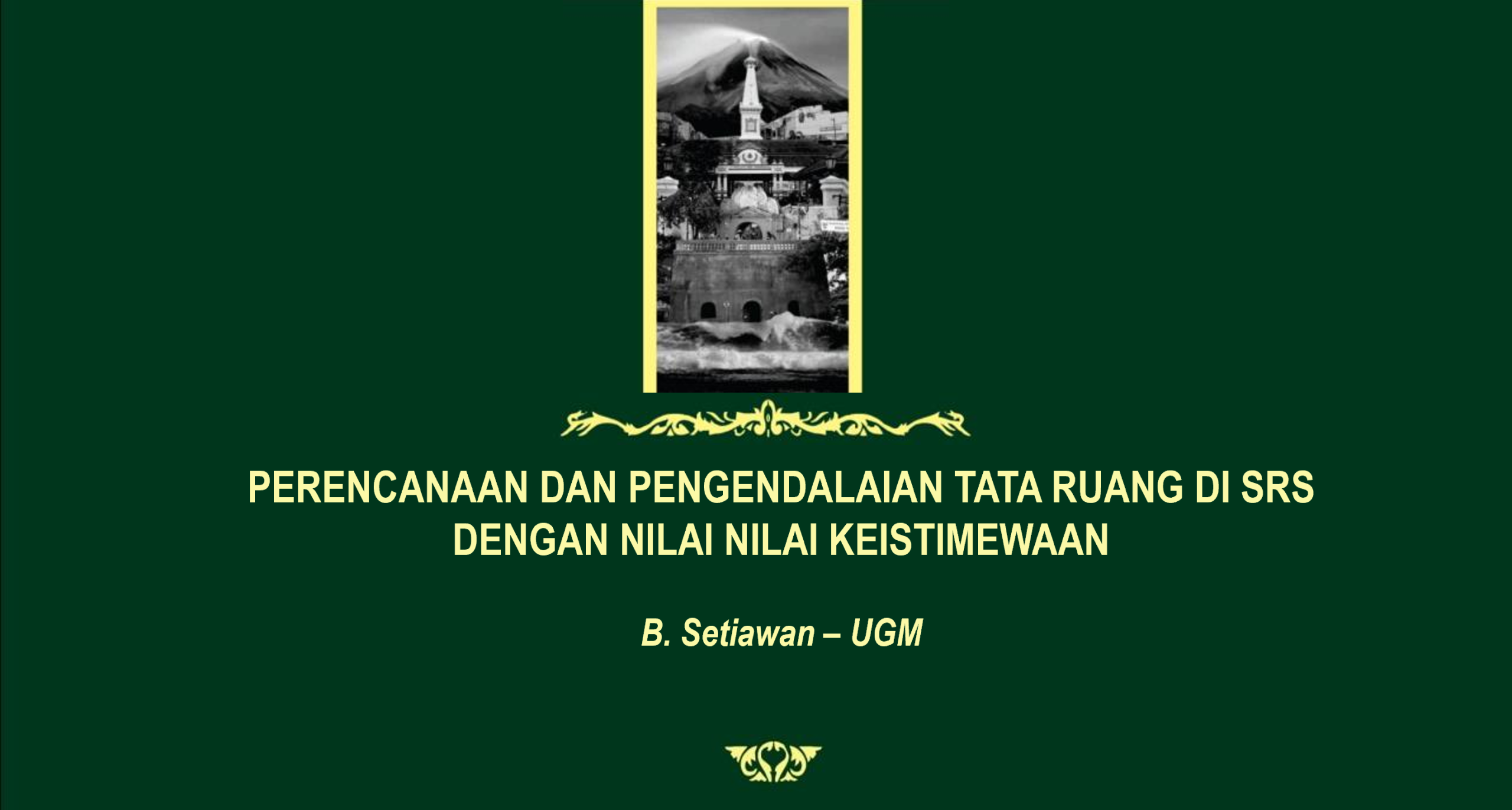
Prof. Ir. Bakti Setiawan, M.A., Ph.D., a faculty member of the Department of Architecture and Planning, Faculty of Engineering, Universitas Gadjah Mada (UGM), served as a keynote speaker in a dissemination event on Spatial Planning Documents covering the Yogyakarta Special Region Spatial Plan (RTRW) 2023–2043 and the Development Strategy for the Sultanate and Duchy Strategic Spatial Units (Satuan Ruang Strategis/SRS) 2023–2043. The event was organized by the Government of the Special Region of Yogyakarta on Monday, May 25, 2026, at the Adhikari Meeting Room of the Regional Land and Spatial Planning Agency (DISPERTARU DIY).
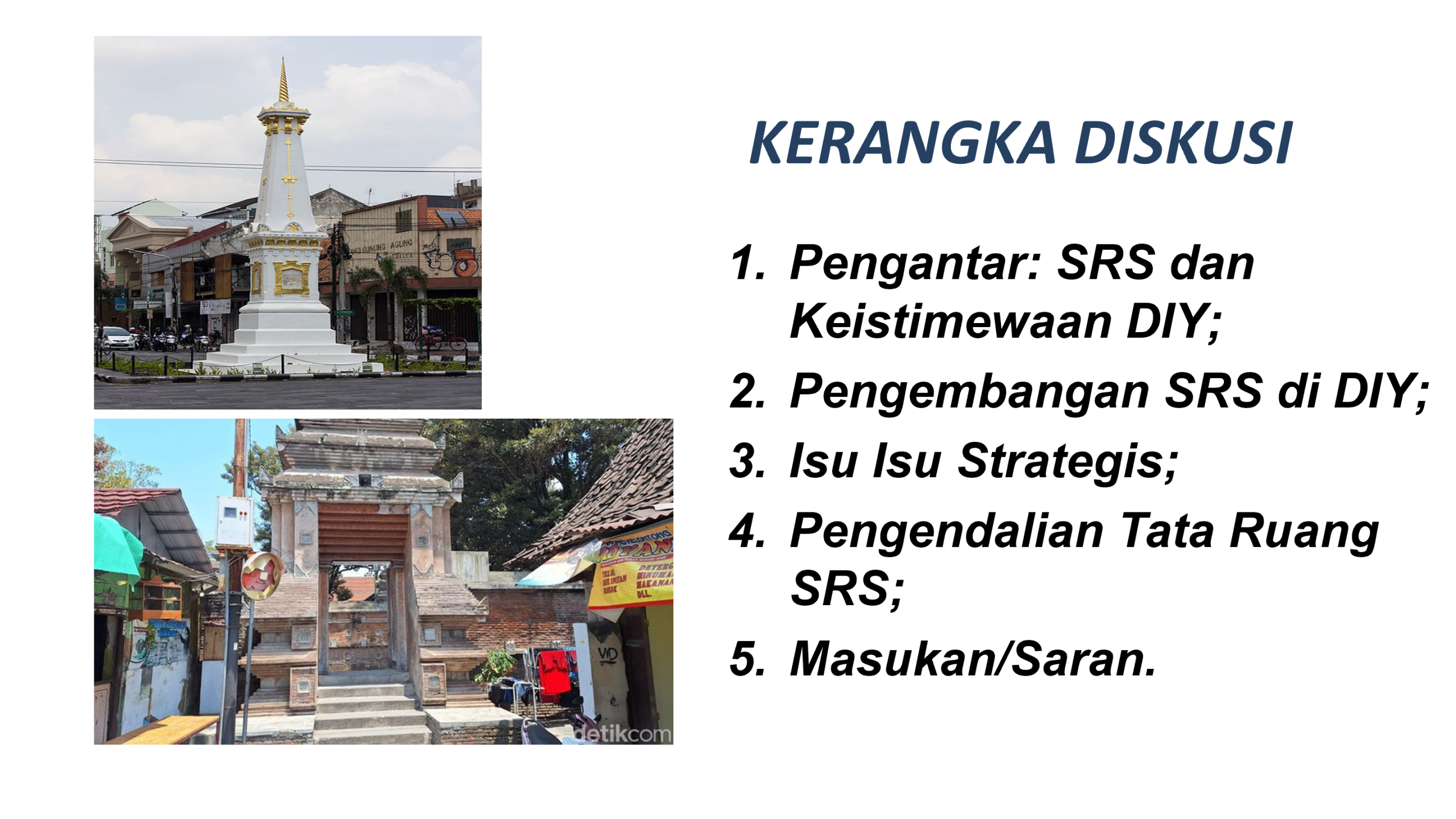
During the event, Prof. Bakti Setiawan delivered a presentation on planning and controlling spatial development within Strategic Spatial Units (SRS) based on the special values and characteristics of Yogyakarta. He emphasized that spatial planning should not merely be viewed as a tool for regulating the physical use of land and space, but also as a means to achieve broader development goals, including cultural preservation, environmental protection, and the enhancement of community welfare.
Prof. Bakti explained that the Special Region of Yogyakarta possesses unique geo-ecological and cultural characteristics, requiring regional development to consider the interrelationships among spatial, environmental, historical, and cultural dimensions. According to him, Strategic Spatial Units serve as core areas that embody the region’s distinctive values while also functioning as models for sustainable spatial development.
In his presentation, he highlighted the importance of ensuring that SRS development extends beyond the protection of designated areas. The development and utilization of these areas should be carefully planned to generate tangible benefits for local communities. Therefore, the preparation of comprehensive master plans is essential to ensure alignment between spatial planning policies, development programs, and efforts to preserve areas of special significance.
Furthermore, Prof. Bakti underscored the need for stronger synergy among institutions and stakeholders involved in SRS management. He noted that cross-sectoral coordination, local community participation, and harmonization with regional development planning documents are critical factors in achieving effective and sustainable area development. He also stressed the importance of balancing protection, development, and utilization as integral components of preserving Yogyakarta’s unique heritage values.
The dissemination event served as an important forum for strengthening stakeholders’ understanding of the direction of spatial planning in Yogyakarta through 2043 while aligning regional development strategies with the region’s unique characteristics and identity. Prof. Bakti Setiawan’s participation as an academic and regional planning expert is expected to contribute valuable insights toward the implementation of more integrated, adaptive, and sustainability-oriented spatial planning policies.
This activity contributes to several Sustainable Development Goals (SDGs), particularly SDG 11 (Sustainable Cities and Communities) through efforts to promote inclusive, safe, resilient, and sustainable regional development; SDG 15 (Life on Land) through its emphasis on environmental protection and the preservation of significant landscapes; and SDG 17 (Partnerships for the Goals) through strengthened collaboration among government institutions, academics, and various stakeholders in spatial planning and management based on the special values of the Special Region of Yogyakarta.
Reported by Rindi Dwi Cahyati