
Yogyakarta, 24 October 2025 – The Department of Urban and Regional Planning (PWK), Universitas Gadjah Mada, once again hosted an online guest lecture featuring Jelle Thery, MLA, a Landscape Architect and Founder of Urban Nature. The lecture was entitled “Integrated Water Resilience, Designing for Biodiversity, and Creating Happy Places for People (Forming Accessible Places Where Nature and People Find a Balance).”
In this lecture, Jelle Thery discussed landscape architecture concepts centered on a harmonious relationship between humans and nature. The main issue highlighted was the importance of Regenerative Design, an approach that focuses not only on sustainability but also on the restoration of natural ecosystems. This approach integrates urban water management (water resilience), the enhancement of biodiversity, and the creation of healthy and enjoyable public spaces (happy places). In this context, Jelle emphasized that nature should be understood as a system intrinsically connected to humans, rather than merely a backdrop, and that design must foster a symbiotic relationship between the two.
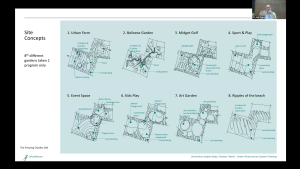
In addition to explaining these concepts, Jelle presented various case studies from projects in Singapore, China, Malaysia, and Indonesia that implement regenerative design principles. Examples included Bidadari Park in Singapore, which restores urban water balance; Dongguan Central Park in China, which creates a natural wetland ecosystem; and Jurong Lake District, which applies biophilic design strategies to reduce urban temperatures.

Jelle Thery emphasized that future landscape design must be ecocentric, supporting ecological sustainability, social well-being, and resilience to climate change through the integration of water systems, vegetation, and human life within urban spaces.
This guest lecture is relevant to several Sustainable Development Goals (SDGs), including SDG 6 (Clean Water and Sanitation), SDG 9 (Industry, Innovation, and Infrastructure), SDG 11 (Sustainable Cities and Communities), SDG 13 (Climate Action), and SDG 15 (Life on Land).