The Doctoral Program in Architecture of the Department of Architecture and Planning (DTAP), Faculty of Engineering, Universitas Gadjah Mada (UGM), has once again achieved a significant academic milestone through the publication of two scientific works in reputable international publications. These publications demonstrate the contribution of the academic community of the Doctoral Program in Architecture to addressing various global challenges, ranging from indoor thermal comfort to the conservation of cultural and natural heritage.
SDGs 13
Doctoral students from the Architecture Study Program, Department of Architectural Engineering and Planning (DTAP), Faculty of Engineering, Universitas Gadjah Mada (UGM), continue to strengthen their academic contributions through research publications in internationally reputable Scopus-indexed journals. Two recent studies highlight different architectural issues, ranging from architectural education to heritage conservation.
The research article titled “Evaluating relationships between hand-drawing ability and design performance: Case of Architecture Study Program UGM” was authored by Kadek Indira Diah Kardina, Labdo Pranowo, Nur Zahrotunnisaa Zagi, and Dijeng Dwi Putri, together with lecturers Mario Lodeweik Lionar, S.T., M.Sc., Ph.D. and Harry Kurniawan, S.T., M.Sc., Ph.D. The article was published in the international journal ARTEKS: Journal of Architecture. This study examines the relationship between hand-drawing ability and architecture students’ design performance. Using a quantitative correlation-based approach, the research demonstrates that visual representation skills play an important role in supporting creative thinking processes and architectural design development while considering the context of architectural education. The full article can be accessed through the following link: https://journal.unwira.ac.id/index.php/ARTEKS/article/view/2841.
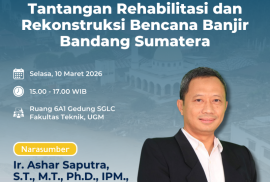
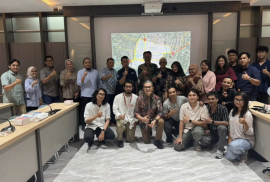
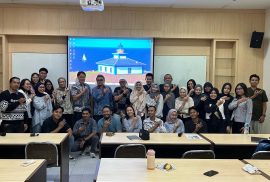
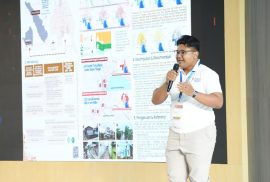
The Urban and Regional Planning Program (PWK) at Universitas Gadjah Mada (UGM) recently held a guest lecture exploring both the technical and human aspects of post-disaster management. Featuring Ir. Ashar Saputra, Ph.D., IPM from the Department of Civil and Environmental Engineering, UGM, the discussion highlighted the complexity of regional recovery efforts in Sumatra following devastating flood events.
In his presentation, Dr. Ashar emphasized that recovery is not merely about rebuilding what has been damaged, but about implementing the Build Back Better principle. He highlighted real challenges encountered in the field, including logistical constraints, debris removal, and limited access to construction materials in remote areas. One notable aspect discussed was the importance of locality-based approaches, where during emergency situations, flood-drifted wood can be creatively reused to construct environmentally friendly temporary shelters while actively involving disaster survivors in the recovery process.
On Friday, February 13, 2026, students of the Comprehensive Urban Design Studio participated in a Focus Group Discussion (FGD) on Spatial Planning for the Low Emission Zone (KRE) of Jeron Beteng. The activity was conducted under the supervision of Prof. Ikaputra and Prof. Bambang Hari Wibisono, and initiated by the Pusat Studi Transportasi dan Logistik UGM. This FGD served as an integral part of the studio learning process, with Jeron Beteng designated as the study object, allowing students to directly engage with real-world urban planning challenges.
On this occasion, the Undergraduate Program in Urban and Regional Planning (PWK), Universitas Gadjah Mada, invited Dr. Yetty Setiyaningsih, S.P., M.Eng., Head of the Economic, Infrastructure, and Regional Division of Magelang City, as a guest lecturer. She delivered a presentation titled “Understanding Magelang City: Profile and Current Spatial Issues.”
In her presentation, Dr. Yetty highlighted various development dynamics and spatial challenges currently faced by Magelang City. With a relatively small area of approximately 18.56 square kilometers, the city is confronted with limited land availability, which has driven a high rate of land-use conversion. One of the key issues discussed was the threat to urban food security due to declining agricultural productivity. This is further exacerbated by the conversion of Protected Rice Fields (Lahan Sawah yang Dilindungi/LSD), of which around 34.59% have already been transformed into built-up and other land uses.
On Friday, February 6, 2026, the Master of Urban Design Program organized a public lecture to mark the beginning of the even semester of the 2025/2026 academic year. The event was conducted in a hybrid format, held offline at Lecture Room 1, 3rd Floor, North Wing of DTAP FT UGM, and simultaneously accessible online via Zoom Meeting. Open to the public and alumni, the lecture provided a platform for knowledge exchange and engagement beyond the academic community, fostering a broader discussion on contemporary urban design issues.
Warid Zul Ilmi (Warid) is the first student of the research-based master’s program, known as the Master by Research (MBR), at the Master of Urban and Regional Planning (MPWK), Faculty of Engineering, Universitas Gadjah Mada. He joined MPWK UGM in the Even Semester of the 2023/2024 Academic Year, bringing strong enthusiasm and dedication to research as a means of understanding, interpreting, and responding to various urban development challenges. He succesfully graduated with Cum Laude Honors on January 2026.
Author: Computational Spatial Planning Laboratory, DTAP, UGM
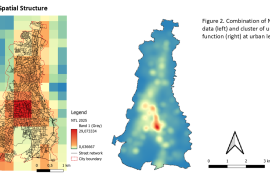
Understanding urban spatial structures is fundamental for guiding equitable and sustainable urban development, particularly in cities undergoing rapid transformation in the Global South. Conventional approaches often depend on fixed administrative boundaries or outdated planning models, which inadequately reflect the fluid and evolving nature of urban spatial dynamics. These traditional frameworks tend to overlook the complex interactions and functional linkages that shape urban form and activity patterns, thereby limiting the effectiveness of urban planning and policy interventions. To address this gap, our study introduces an integrated geospatial methodology that combines diverse spatial datasets and advanced analytical techniques to delineate urban centers and sub-centers more accurately. By applying this approach to Magelang city and region in Central Java, Indonesia, the research highlights how combining multiple scales of spatial data—such as land use, transportation networks, and socio-economic indicators—can reveal nuanced spatial structures that traditional methods miss. This multi-scale analysis not only enhances the understanding of urban spatial functions but also provides a robust framework for planners and policymakers to identify emergent urban patterns and support more adaptive, context-sensitive urban development strategies.


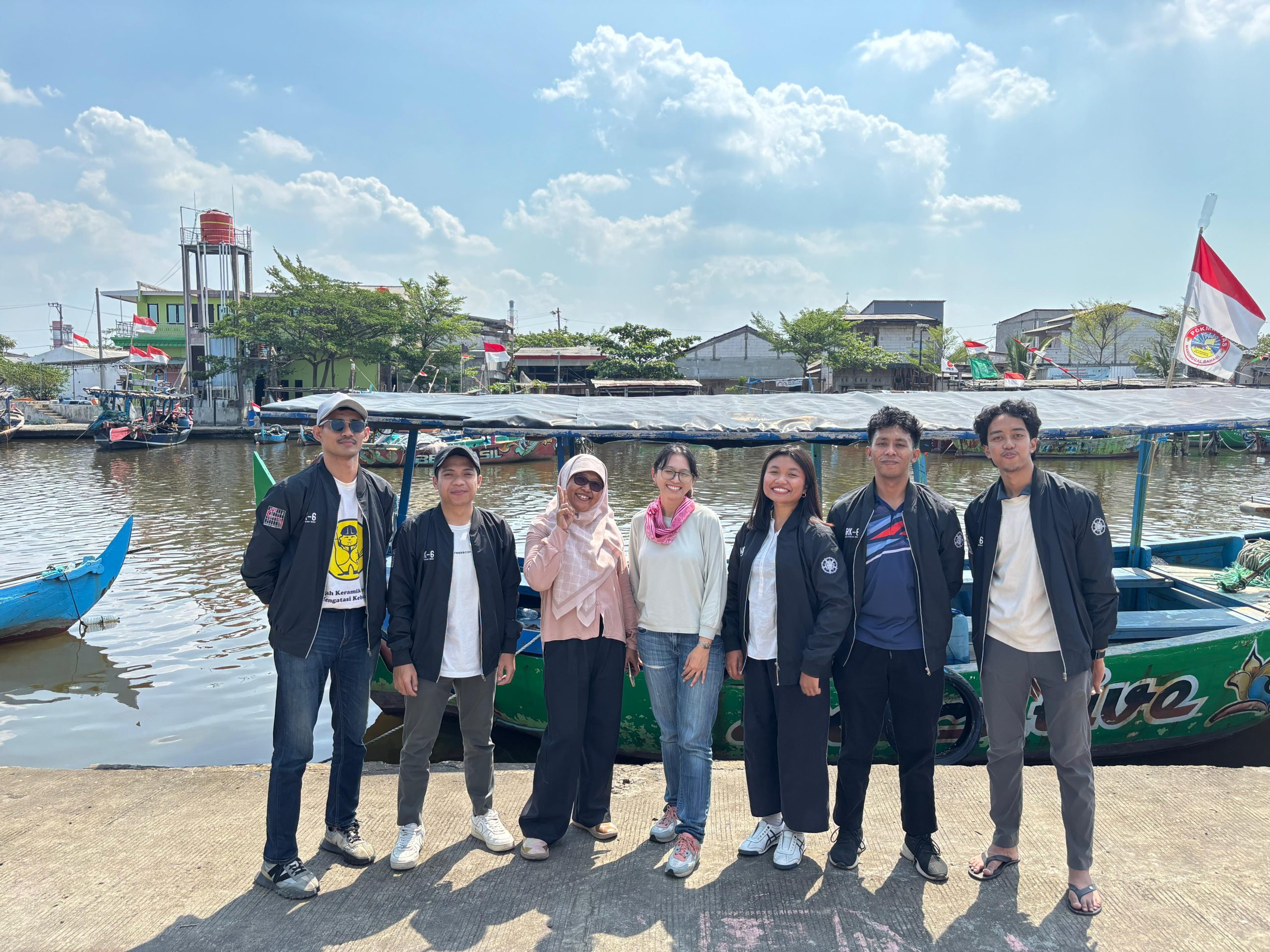
Saturday, 27 September 2025 – Students of the Master of Urban Design Program, Cohort 6, conducted a field study in Tambaklorok, Semarang. Tambaklorok is the largest fishing settlement in Semarang and is directly adjacent to the Java Sea. This activity was part of the course Disaster-Resilient Area Design, under the supervision of Dr. Ardhya Nareswari and Dr. Atrida Hadianti.
Through this case study, students were expected to develop design proposals for a disaster-resilient area while continuing to accommodate and support the daily activities of the local community.
Yogyakarta, 24 October 2025 – The Department of Urban and Regional Planning (PWK), Universitas Gadjah Mada, once again hosted an online guest lecture featuring Jelle Thery, MLA, a Landscape Architect and Founder of Urban Nature. The lecture was entitled “Integrated Water Resilience, Designing for Biodiversity, and Creating Happy Places for People (Forming Accessible Places Where Nature and People Find a Balance).”
In this lecture, Jelle Thery discussed landscape architecture concepts centered on a harmonious relationship between humans and nature. The main issue highlighted was the importance of Regenerative Design, an approach that focuses not only on sustainability but also on the restoration of natural ecosystems. This approach integrates urban water management (water resilience), the enhancement of biodiversity, and the creation of healthy and enjoyable public spaces (happy places). In this context, Jelle emphasized that nature should be understood as a system intrinsically connected to humans, rather than merely a backdrop, and that design must foster a symbiotic relationship between the two.