Indonesia once again demonstrated its significant role in international cultural diplomacy through the presence of Dr. Eng. Ir. Laretna Trisnantari Adhisakti, M.Arch. (Bu Sita) as a keynote speaker at the international conference Guarding Hometown – Learning Across Domain on 31 October 2025. The conference was held alongside the 48th Annual Conference of Japan’s National Federation for the Preservation and Regeneration of Heritage Cities (Machinami Hozon), which for the first time in the organization’s history took place outside Japan. Indonesia’s participation marked the continuation of its active contribution to developing more inclusive, community-based approaches to heritage conservation.
SDGs 6
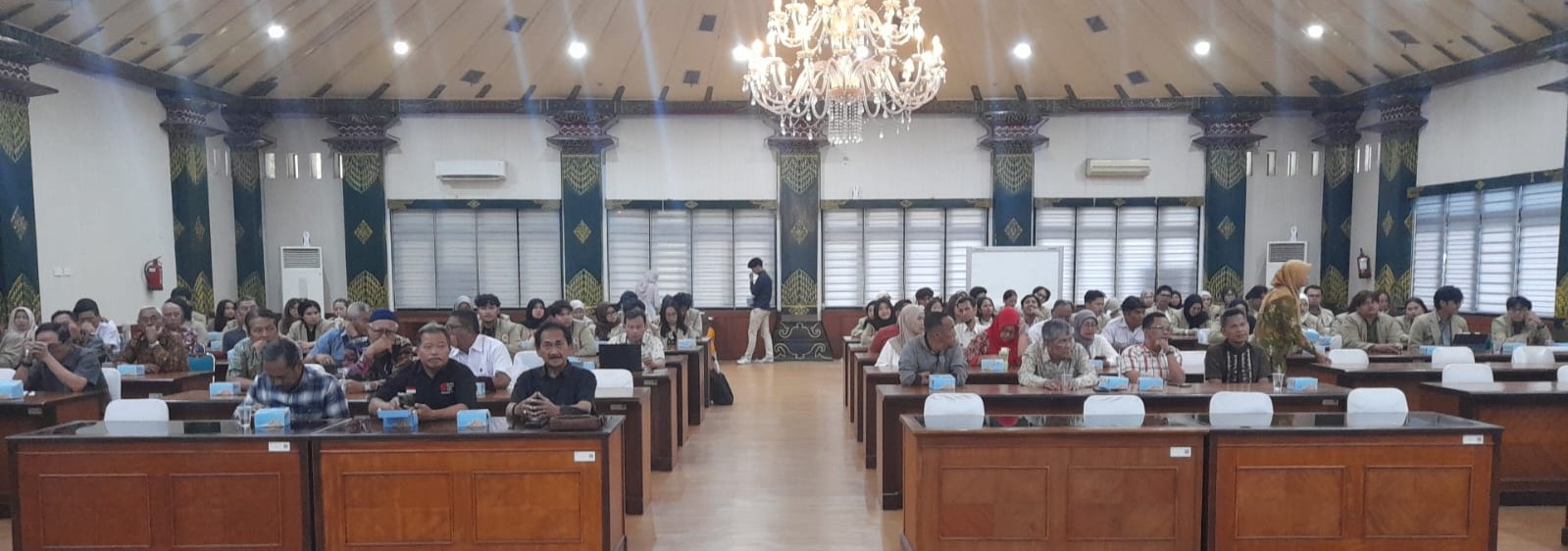
Students from the Urban Area Planning Studio in the Urban and Regional Planning Program (PWK), Universitas Gadjah Mada (UGM) actively participated in the planning activities for the Code River area, organized by the Division of Housing and Settlement Areas, Department of Public Works, Housing, and Settlement Areas (PUPKP) of Yogyakarta City. This initiative is part of the Yogyakarta City Government’s efforts to formulate an integrated direction for the development and management of the Code River area. Through their involvement, students had the opportunity to connect academic analysis with the real-world needs and dynamics of urban planning in the field.
The Urban and Regional Planning Program (PWK) at Universitas Gadjah Mada is collaborating with the Yogyakarta City Government’s Department (Dinas Pekerjaan Umum, Perumahan, dan Kawasan Permukiman) to revitalize the area surrounding the Code river (as known as Kali Code). This initiative is part of the 2025/2026 odd-semester Urban Planning Studio, engaging students as emerging planners to envision the future of one of the city’s most iconic areas.
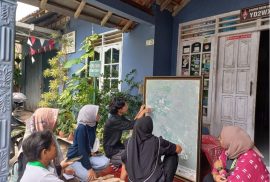
The collaboration offers strategic benefits for both sides: the city government gains support in preparing an integrated, research-based master plan, while UGM’s academic community, especially PWK students, has the opportunity to learn directly from a real-world case. Students will be involved in stakeholder engagement, enabling them to address on-site issues while testing their technical and social planning skills.
As rapid urbanization continues to shape Southeast Asia, the need for sustainable water management becomes increasingly critical. Addressing this challenge, PolyUrbanWaters is a groundbreaking research and project network funded by the German Federal Ministry of Education and Research (BMBF). It brings together academic institutions, municipalities, government agencies, civil society, and private-sector stakeholders from Indonesia, Cambodia, Laos, Thailand, Vietnam, and Germany to develop a polycentric approach to urban water management.