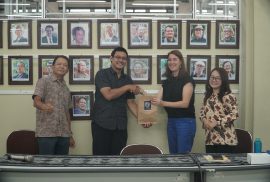
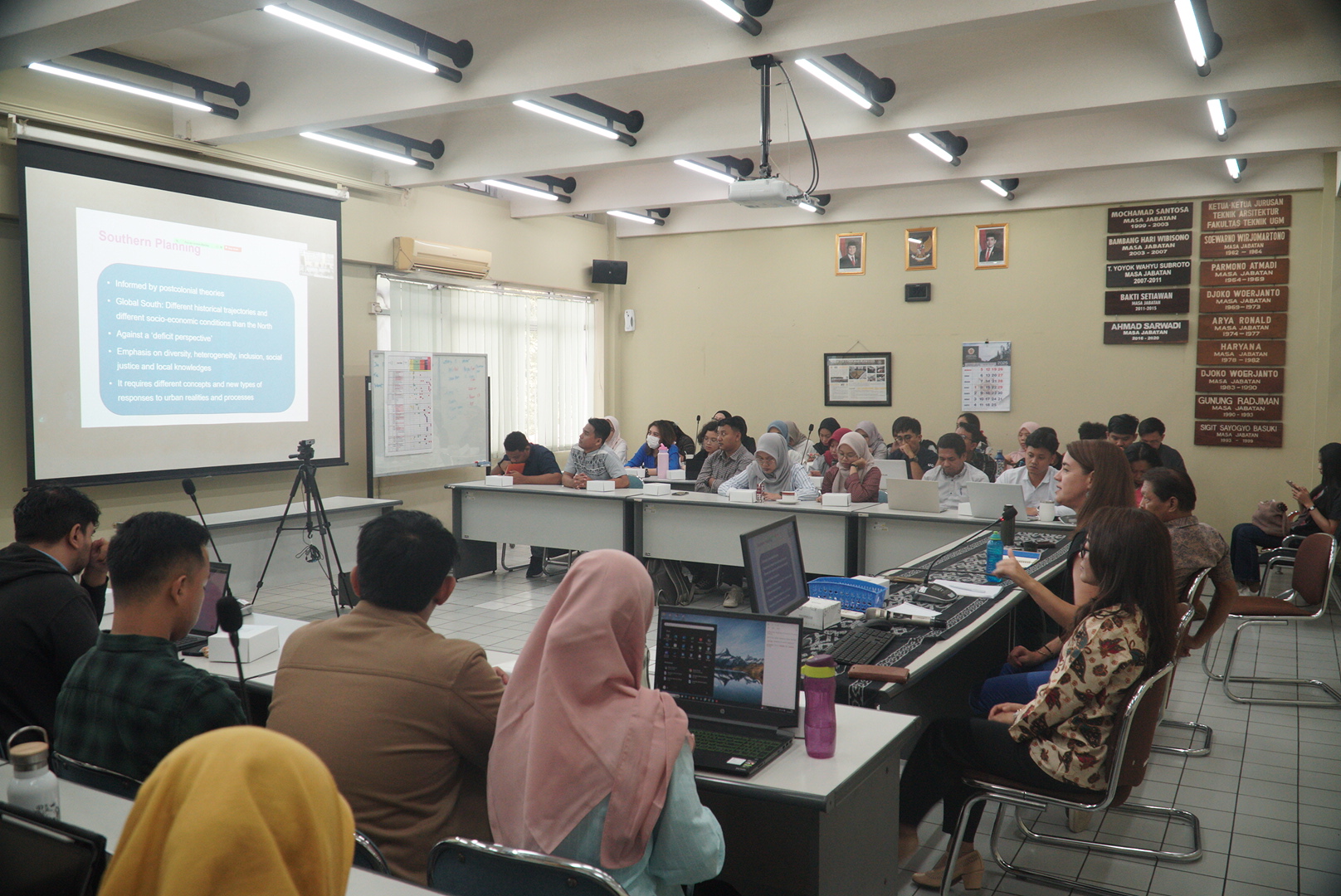
Yogyakarta, 7 February 2025 – Dr. Sonia Roitman, an Associate Professor in Development Planning at the University of Queensland, recently visited Universitas Gadjah Mada (UGM) to share her insights on Indonesian Planning in Southern Planning Context, especially her insight on urban inequalities and housing policies. The event brought together UGM students, Paguyuban Kalijawi, and ARKOM, sparking a lively discussion about the unique and complex challenges and opportunities in urban development, particularly in Indonesia.
Sustainability
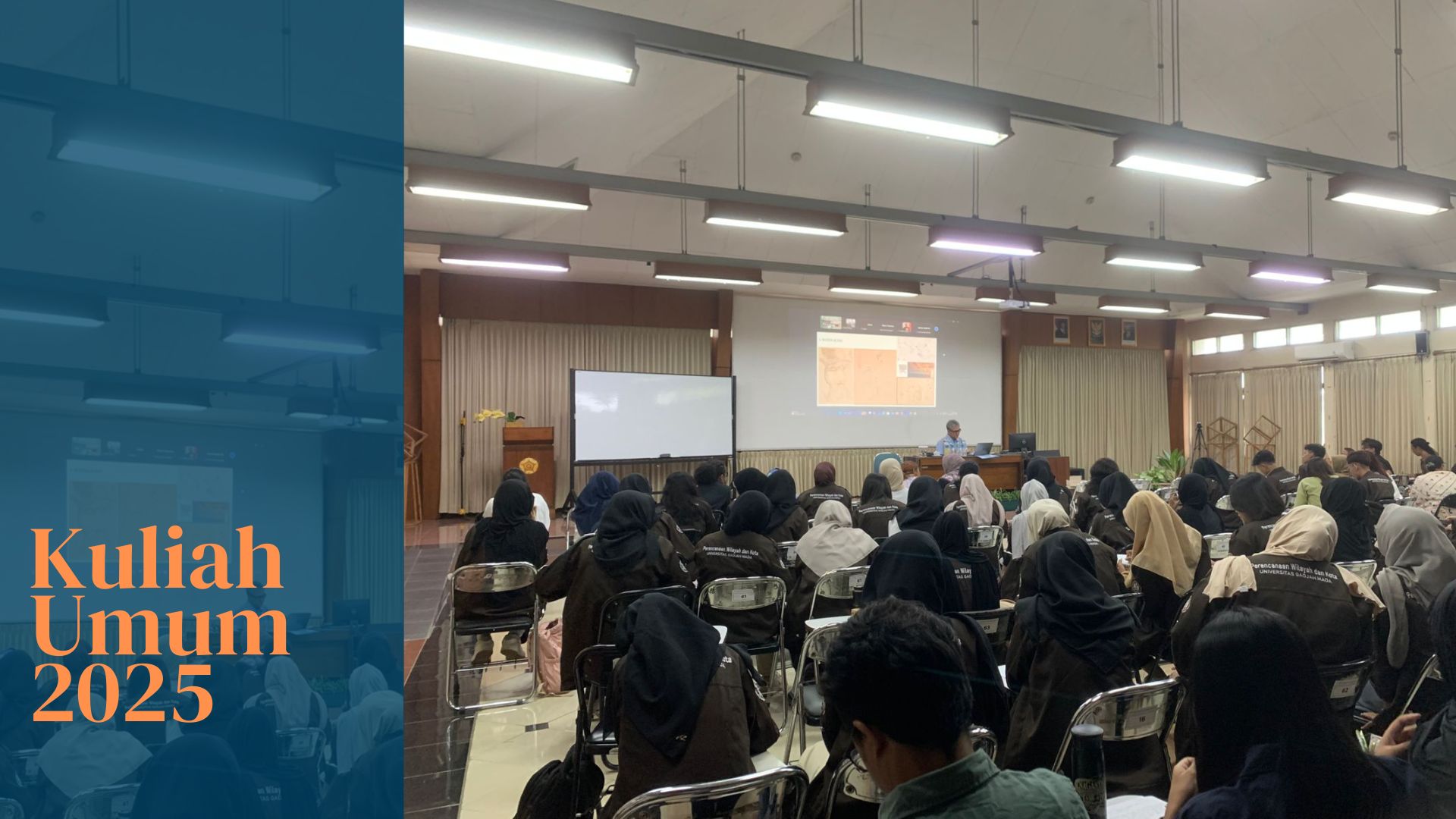
Yogyakarta, February 11, 2025 – The Urban and Regional Planning Study Program (PWK) of Universitas Gadjah Mada (UGM) held a public lecture titled Indonesian Cities: An Introduction for the General Public. The event featured Marco Kusumawijaya, the founder and senior advisor of Rujak Center for Urban Studies, as the main speaker. This lecture was part of the Community Development course and was open to both students and the general public.
The public lecture took place in Room K1, second floor, Department of Architecture and Planning (DTAP), Faculty of Engineering UGM. The event was opened by Prof. Ir. Bakti Setiawan, M.A., Ph.D., and accompanied by Widyasari Her Nugrahandika, S.T., M.Sc., the course instructor.

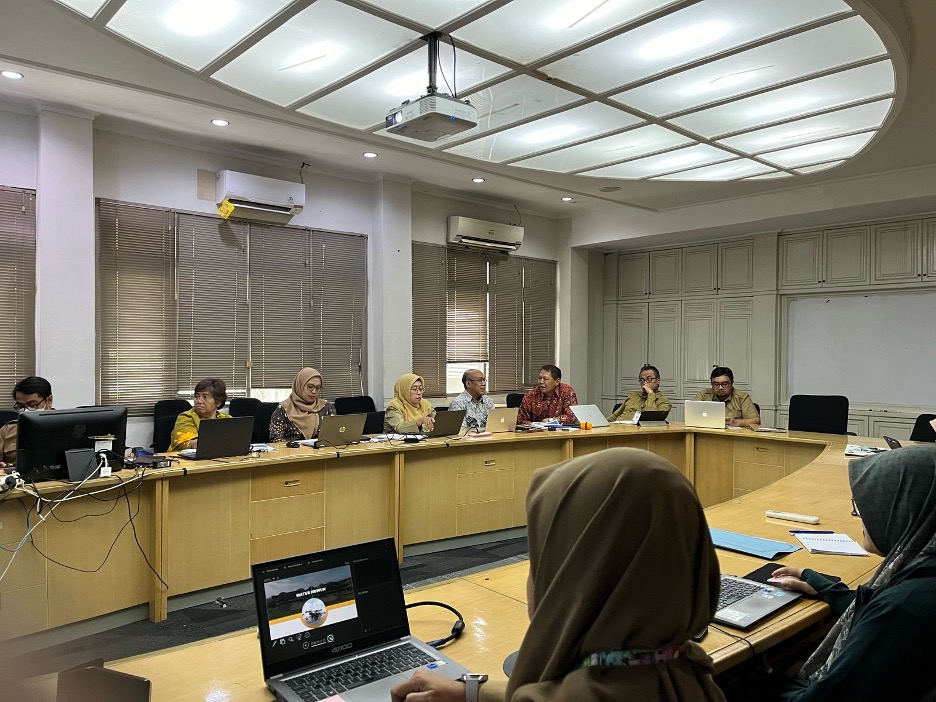
Yogyakarta, March 2025 – Prof. Ir. Bakti Setiawan, M.A., Ph.D. has been invited to serve as a member of the Regional Independent Evaluation Team (TPID) for the 2025 Reka Cipta Bhakti Nugraha Award. The Reka Cipta Bhakti Nugraha Award is a form of appreciation for the performance of regency/municipal governments in preparing and implementing high-quality, innovative, and impactful regional development planning documents. The award is initiated by the Regional Development Planning, Research, and Innovation Agency (Bapperida) of the Regional Government of the Special Region of Yogyakarta, with the aim of encouraging improved development planning practices and the replication of best practices across regions.
On January 13, 2025, the Doctoral Program of Architecture, DTAP FT UGM, held a Closed Examination for Doctoral Candidate Luhur Sapto Pamungkas with the dissertation titled “Socio-Cultural Values in the Model of Sustainable Urban Kampung in Yogyakarta City.”
This research was conducted to explore the factors influencing sustainable urban kampung (KUB), which were identified based on sustainable development theories and empirical facts from previous studies. The aim was to examine these factors and discover a formula for KUB.
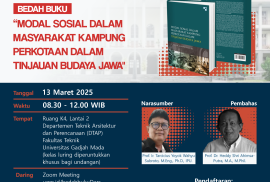
he Doctoral Program in Architecture, DTAP Faculty of Engineering UGM, successfully held the Kamisan Forum on Thursday, March 13, 2025. This edition of the Kamisan Forum was supported by UGM Press and featured a book discussion on Social Capital in Urban Kampung Communities from the Perspective of Javanese Culture.
The book is the work of Prof. Ir. Tarcicius Yoyok Wahyu Subroto, M.Eng., Ph.D., IPU, a professor in the Doctoral Program in Architecture. It was published by UGM Press in October 2024 and contains the results of his research on the dynamics of kampung (urban village) life.
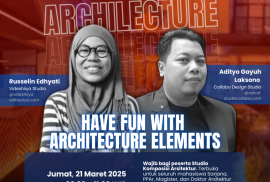
To inspire the students’ architectural enthusiasm, on Friday, March 21, 2025, the Undergraduate Architecture Program held a guest lecture event called Archilecture with the theme “Have Fun with Architecture Elements”in Lecture Room 1 of the Department of Architecture and Planning (DTAP), Faculty of Engineering, Universitas Gadjah Mada. The event featured two alumni from UGM’s Undergraduate Architecture Program: Russelin Edhyati (Videshiiya Studio) and Adityo Gayuh Laksono (Collabo Design Studio/CDS), and was moderated by UGM Architecture lecturer Nur Zahrotunnisaa Zagi, S.T., M.T.
Jakarta, March 18, 2024 – Prof. Ir. Bakti Setiawan, M.A., Ph.D. (Prof. Bobi) participated in the Roundtable Discussiontitled Evolutionary Planning of the Capital Habitat 2045 (EPOCH 45). This event was organized by the Department of Urban and Regional Planning at Diponegoro University (UNDIP) in collaboration with MARS Architects, the Asian Development Bank, Van Eesteren-Fluck & Van Lohuizen Stichting, and the Embassy of the Netherlands. The discussion took place at Erasmus Huis, Kuningan, South Jakarta.
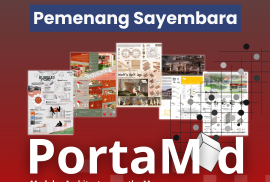
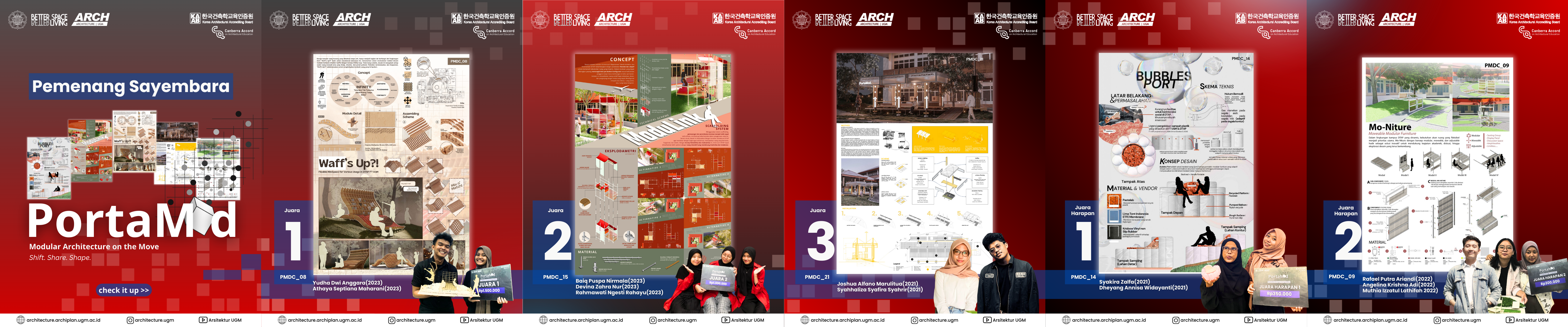
The campus environment, especially in the Department of Architecture and Planning (DTAP), has many empty spaces that have the potential to be activated as functional areas. One of them is the DTAP innercourt, an open space that is often underutilized. With an innovative design approach, this area can be transformed into a place that supports discussion activities, collaboration, and informal interactions between students and lecturers.
The need for small spaces that are flexible, multifunctional, and easy to move is relevant in the campus environment. These modular spaces can be adapted to maximize the use of the innercourt and other empty areas in DTAP. In addition to enriching the quality of space in the campus environment, modular design also provides flexibility for use in other locations as needed.
As rapid urbanization continues to shape Southeast Asia, the need for sustainable water management becomes increasingly critical. Addressing this challenge, PolyUrbanWaters is a groundbreaking research and project network funded by the German Federal Ministry of Education and Research (BMBF). It brings together academic institutions, municipalities, government agencies, civil society, and private-sector stakeholders from Indonesia, Cambodia, Laos, Thailand, Vietnam, and Germany to develop a polycentric approach to urban water management.
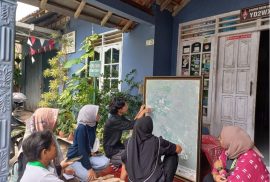
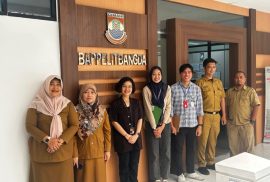
Graduate students from the Master of Urban and Regional Planning Program (MPWK) at Universitas Gadjah Mada (UGM) carried out a field study in several areas across West Java from February 24 to 28, 2025. This activity is part of the academic process aimed at analyzing potentials and identifying issues to support the preparation of urban and regional development plans.
The field study covered four locations: Cimahi City, Cibitung, Bekasi Regency, and Bogor City. These sites were selected based on the focus of each studio group, which was divided into two main areas of interest: city-scale planning and regional-scale planning.