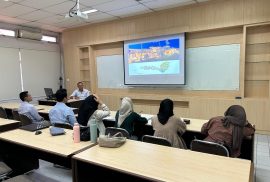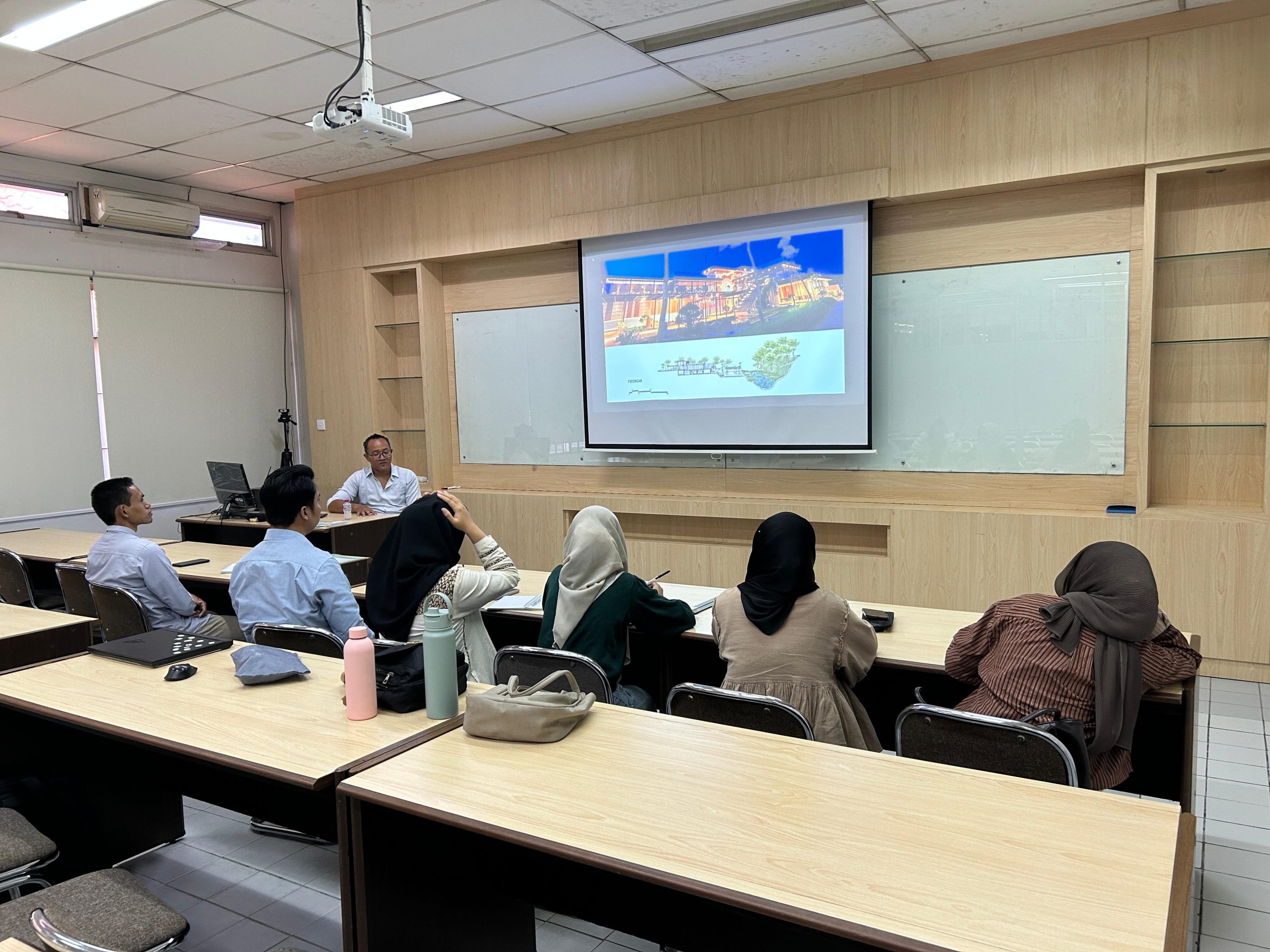
Weaving is one of the most common architectural elements that has been used for centuries in Indonesia. Typically made from bamboo and known as gedhek in Javanese, weaving has traditionally served as walls or partitions in vernacular houses. Today, weaving is no longer limited to traditional homes—it can also be applied in various building typologies such as cafes, hotels, airports, and more. With innovations in materials, weaving can now be adapted to suit specific aesthetics or functions desired in architectural design. BYO Living, a renowned weaving studio from Indonesia, shared their insights on weaving in the MateREALity class (Materiality in Architecture), joined by two practitioners: David Hutama (Nenun Ruang) and Rony Gunawan Sunaryo (rgA studio), on Friday, May 16, 2025, at Room K1, Department of Architecture and Planning, Faculty of Engineering, Universitas Gadjah Mada. The discussion was led by Mutiara Angel Simanjuntak, an undergraduate student of the Architecture Program, class of 2023, who served as the moderator.
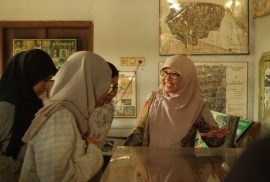
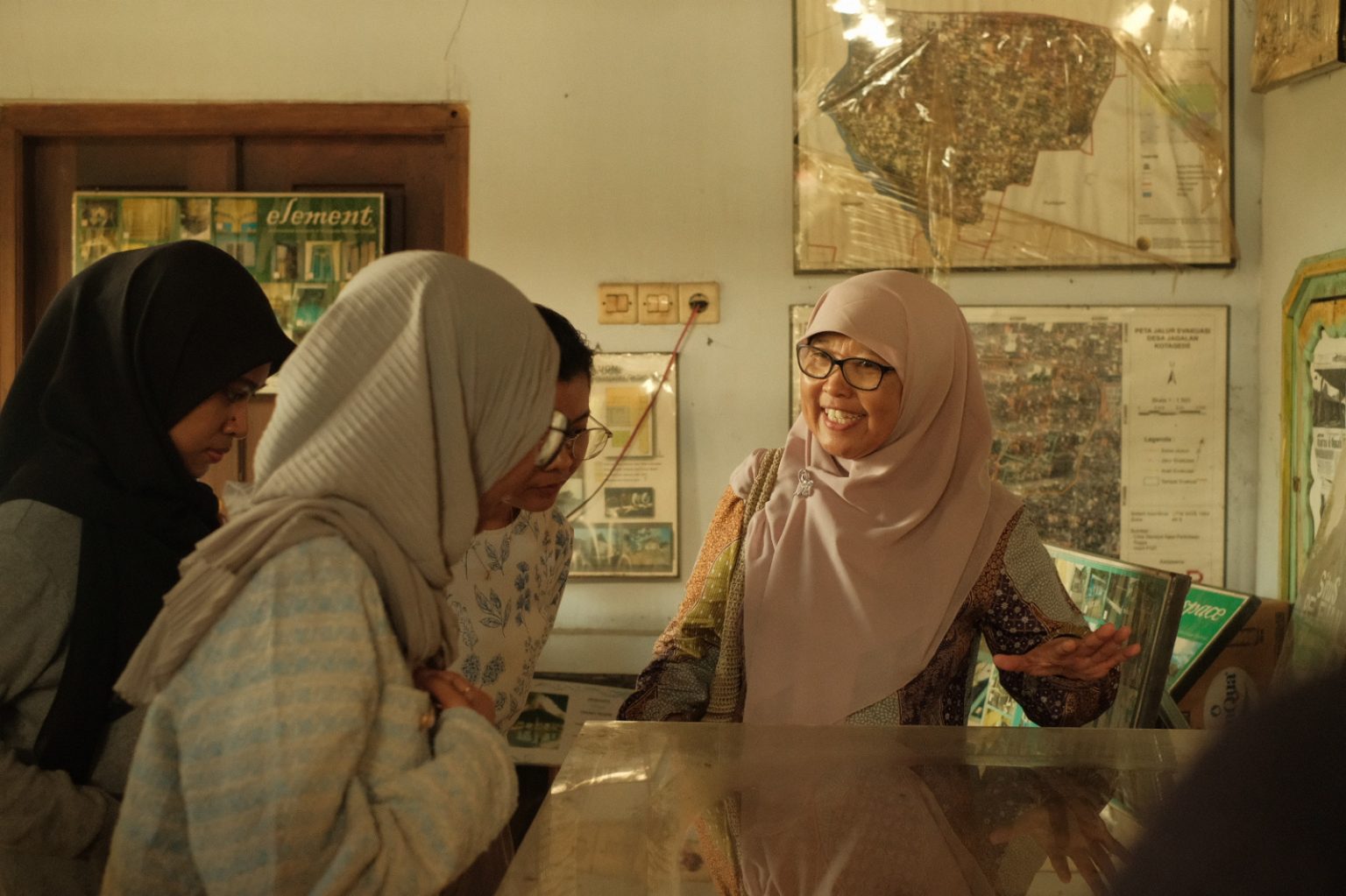
On Tuesday, May 6, 2025, six students from the Master’s Program in Architecture at Universitas Gadjah Mada took part in a field study at Omah UGM, Kotagede. This activity was part of the elective course Resilience in Architecture, and was supervised by two lecturers: Ardhya Nareswari, S.T., M.T., Ph.D. (course instructor) and Ir. Ikaputra, M.Eng., Ph.D.
At Omah UGM, Kotagede, students had the opportunity to explore the application of earthquake resilience concepts in residential areas. The visit allowed them to gain deeper insight into disaster mitigation strategies, building adaptation, and the preservation of historic neighborhoods within the context of seismic risk. Through direct observation and field-based learning, students are expected to expand their knowledge and skills that support the development of disaster-resilient built environments. The implementation of this activity is in line with the achievement of SDG 4, SDG 9, and SDG 11.
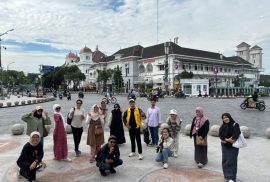
In several parts of the world, the month of May is a time to organize and participate in Jane’s Walk—a global event that celebrates the legacy and ideas of Jane Jacobs, a renowned urban activist whose 1961 book The Death and Life of Great American Cities challenged the myopic views of modernist urban planning. Jacobs was widely influential in reshaping how we think about cities and livable neighborhoods. One of the central ideas in her work is the importance of walking—not just as a mode of movement, but as a way to experience and understand urban spaces.
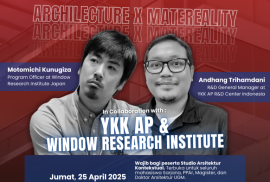
Yogyakarta, April 25, 2025 — Archilecture, a recurring guest lecture series held by the Undergraduate Architecture Program at Universitas Gadjah Mada, made its return in collaboration with the MateREALity (Architectural Materiality) class. This edition of Archilecture focused on a special theme that explored one of the essential elements in architecture—the window—featuring presentations from two practitioners: Motomichi Kunugiza (Program Officer at the Window Research Institute, Japan) and Andhang Trihamdani (R&D General Manager at YKK AP R&D Center, Indonesia).
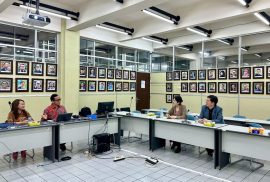
Yogyakarta, May 24, 2025 — The Master Program in Urban and Regional Planning (MURP), Faculty of Engineering, Universitas Gadjah Mada (UGM), welcomed a delegation from the China Center for Urban Development (CCUD) to explore potential collaboration in the field of smart and sustainable city development.
The delegation, led by Mr. Liu Qiang, Deputy Director General of CCUD, and Ms. Zhao Fanfan, Director of the Digital Economy Office within the Smart and Low-Carbon Development Division, was received by Dr. Eng. Muhammad Sani Roychansyah, S.T., M.Eng., and Dr. Ir. Tri Mulyani Sunarharum, S.T., Head and Secretary of the MURP Program. The meeting served as a platform to exchange insights and identify opportunities for future cooperation in areas of urban innovation, planning, and policy.
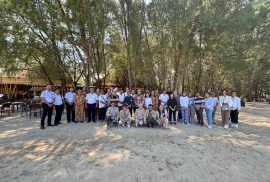
From May 16 to 20, 2025, the sixth cohort of the Master of Urban Design program (2024 intake) conducted a field observation and Focus Group Discussion (FGD) as part of the co-creation tactical placemaking phase in the Comprehensive Exploration Studio course. The project was themed Designing a Low-Emission Area in the Sanur Coastal Region, under the supervision of Dr. Ikaputra and Prof. Bambang Hari Wibisono. This academic activity was part of a collaborative initiative between the World Resources Institute (WRI) Indonesia and Pustral UGM (Center for Transportation and Logistics Studies), involving active participation from local communities and key stakeholders.
On Tuesday, April 22, 2025, the Master of Urban Design Program at Universitas Gadjah Mada invited Ardhyasa Fabrian Gusma, S.T., M.Sc. as a guest lecturer for the Urban Design Methods course. The lecture was held on-site in classroom 1, 3rd floor, and was a mandatory session for first-semester students of the even-year 2024 intake.
During the session that aligns with the achievement of SDG 4 (Quality Education) and SDG 9 (Industry, Innovation, and Infrastructure), Ardhyasa discussed the concept of change, including shifts in ways of thinking, infrastructure transformation, and broader urban changes. He shared his personal experiences and projects that have successfully contributed to positive transformation in their respective contexts, offering students a grounded understanding of change in urban design practice.
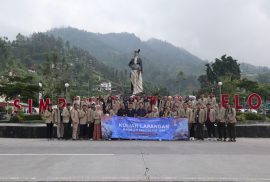
Master’s students from the 2024 cohort of the Architecture Program at Universitas Gadjah Mada conducted a field study and research in Samiran Village, located in Selo Subdistrict, Boyolali Regency, Central Java. The activity took place over three days, from May 15 to 18, 2025, as part of the Research Methodology 2 course, taught by Prof. Ir. Tarcicius Yoyok Wahyu Subroto, M.Eng., Ph.D., IPU., Prof. Ir. Sudaryono, M.Eng., Ph.D., IPU., and Mario Lodeweik Lionar, S.T., M.Sc., Ph.D.
During the fieldwork, students engaged in a phenomenological study, conducting various observations to explore architectural issues and phenomena across micro, meso, and macro spatial scales within the local context. The activity served as hands-on practice for students in applying qualitative research methods, using approaches such as naturalistic inquiry, phenomenology, semiotics, and hermeneutics. In addition to supporting the students’ academic learning, the field study and research in Samiran Village aimed to contribute to the development and sustainability of local settlements, while maintaining respect for the area’s cultural heritage. This activity is aligned with the achievement of several Sustainable Development Goals, particularly, SDG 4 – Quality Education, SDG 9 – Industry, Innovation and Infrastructure, SDG 11 – Sustainable Cities and Communities.
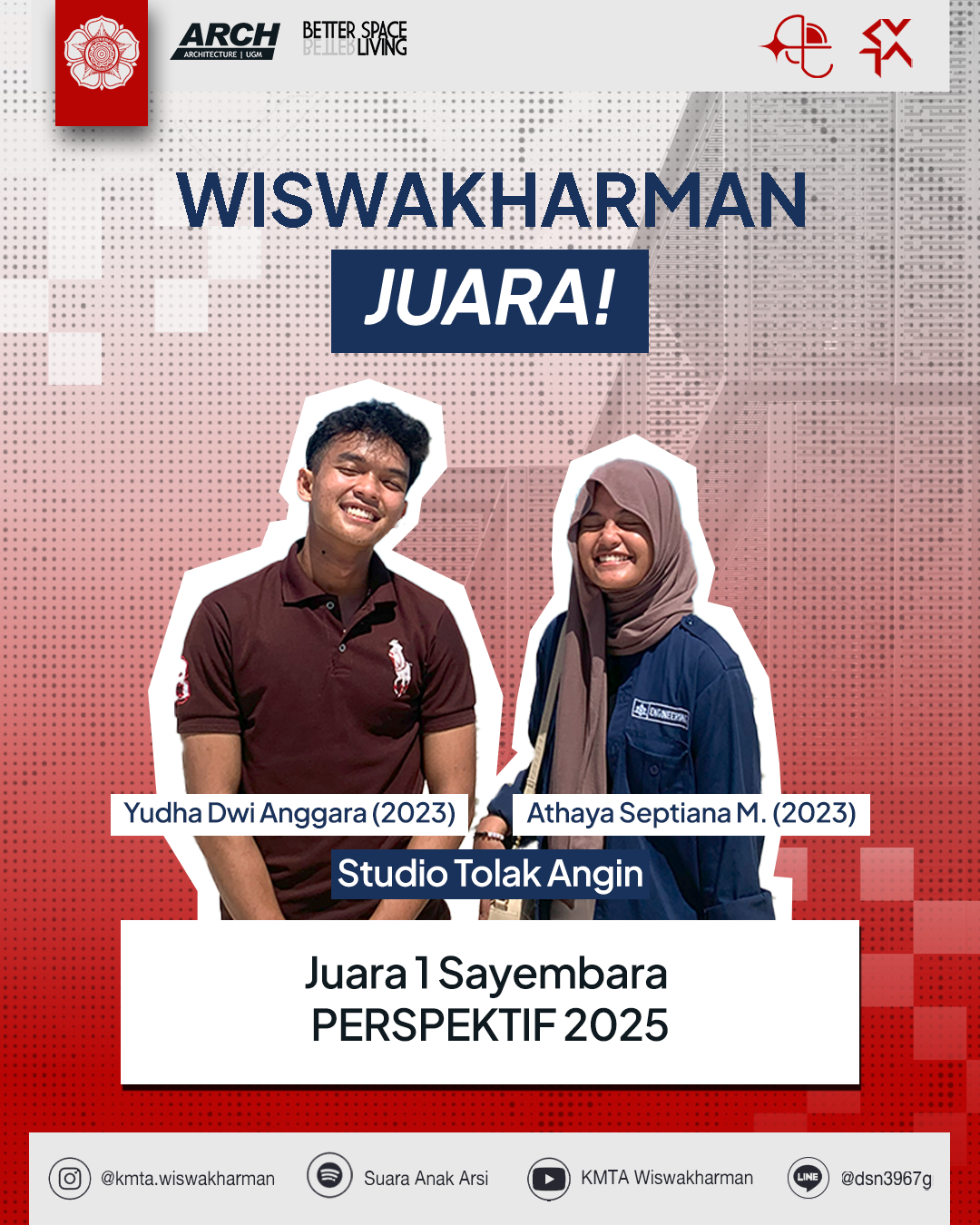
Yogyakarta – Universitas Gadjah Mada (UGM) architecture students have once again achieved outstanding success at the national level by securing 1st Place in the Sayembara Perspektif 2025, themed “Safe Haven and Holistic Healing for Survivors: A Healing Environment Rehabilitation Center for Survivors of Sexual Violence.” Organized by Universitas Mataram, the competition focused on designing rehabilitation spaces for female survivors of sexual violence, emphasizing contextuality and natural materials.
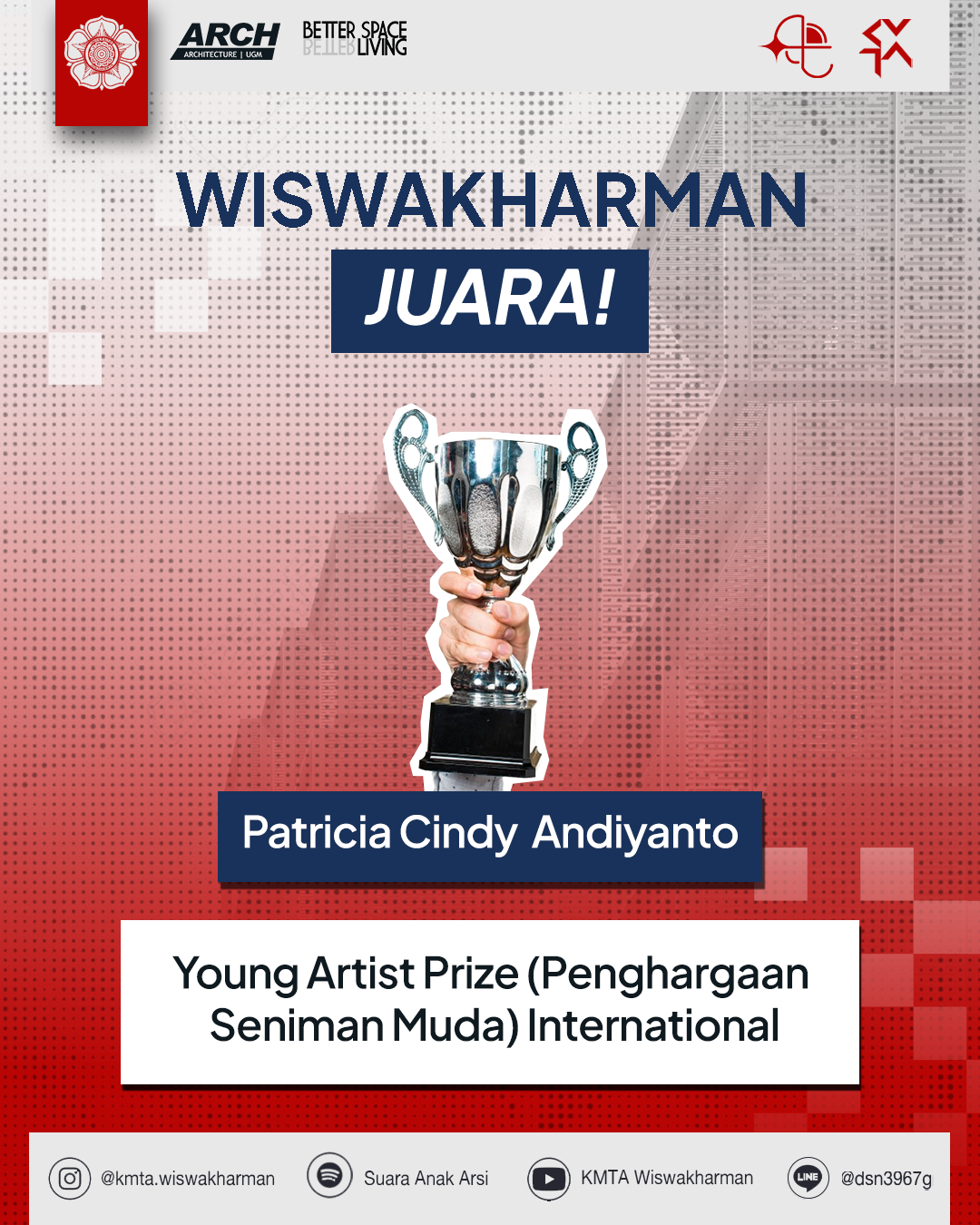
Yogyakarta, May 12, 2025 – Another remarkable achievement has been made by a Universitas Gadjah Mada (UGM) student on the international stage. A UGM architecture student has won an award in the Young Artist Prize Sakura Pigma Art Contest 2025, a global art competition held online. With the theme “Joy in My Studies,” the artwork reflects a personal journey toward higher education at UGM, presented in a captivating artistic style.
Using KOI Sakura watercolor and Micron Sakura pens, the artwork depicts a woman carrying an architect’s tube accompanied by a wooden dragon heading toward UGM’s campus. The background, portraying the road to UGM, is illustrated from a bird’s-eye perspective, creating a profound narrative and visual impact. This artwork not only showcases technical expertise in visual arts but also conveys themes of optimism and enthusiasm for pursuing education.