Ir. Adi Utomo Hatmoko, M.Arch., a lecturer at the Faculty of Engineering, Universitas Gadjah Mada (UGM), and a professional architect, took part in the Talk Series at ARCH:ID 2025, an annual architecture exhibition held on Sunday, May 11, 2025, at ICE BSD, Tangerang. In the session titled “Design for Healing: Hospital & Healthcare Facility Design”, which took place from 14:30 to 15:30 WIB at Alun-alun 2, Pak Adi shared his insights and experiences in designing healthcare facilities that are practical and meet real needs. The event was attended by professionals, architecture students, and the general public from various regions.
SDGs 13-Climate Action
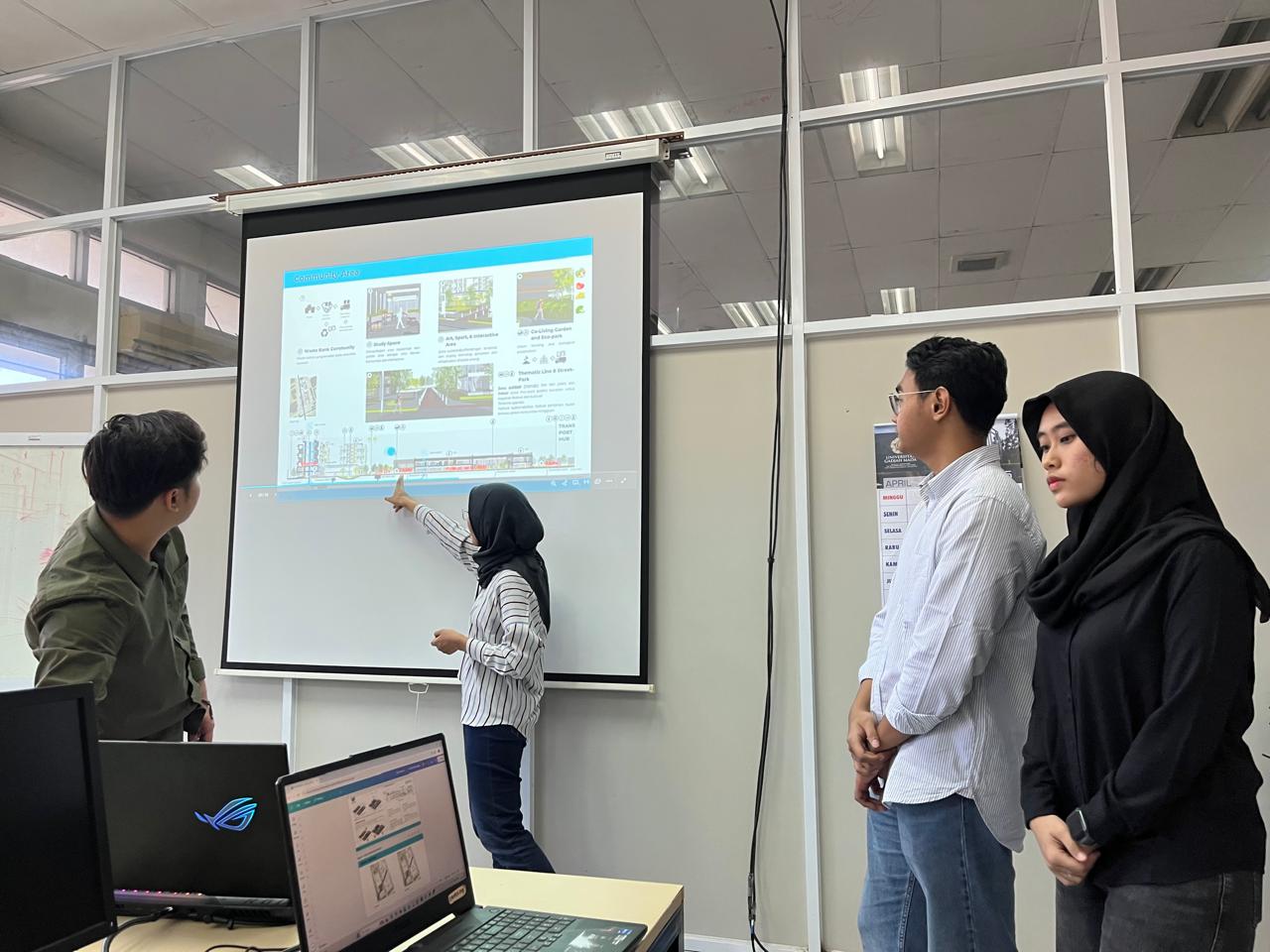
From May 16 to 20, 2025, the sixth cohort of the Master of Urban Design program (2024 intake) conducted a field observation and Focus Group Discussion (FGD) as part of the co-creation tactical placemaking phase in the Comprehensive Exploration Studio course. The project was themed Designing a Low-Emission Area in the Sanur Coastal Region, under the supervision of Dr. Ikaputra and Prof. Bambang Hari Wibisono. This academic activity was part of a collaborative initiative between the World Resources Institute (WRI) Indonesia and Pustral UGM (Center for Transportation and Logistics Studies), involving active participation from local communities and key stakeholders.
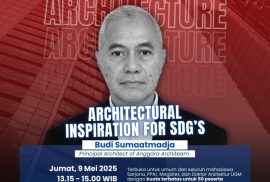
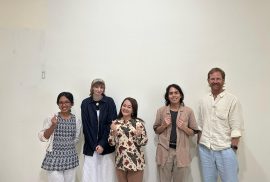
Friday, May 9, 2025, Architecture Program of Department of Architecture and Planning (DTAP) UGM welcomed Ar. Budi Sumaatmadja in its iconic ‘Red Brick’ Campus. Ar. Budi Sumaatmadja, the principal architect of Anggara Architeam, was invited to be a guest reviewer for PPAr (Professional Architect Program) UGM and to be a speaker for Archilecture with the title ‘Architectural Inspiration for SDG’s.’
The agenda was started with Ar. Budi Sumaatmadja reviewing the design progress of the students from PPAr UGM in the morning. Each group presented their proposed design for the C40: Reinventing Cities Competition. The review was conducted in Room K5 DTAP and were also attended by the two external architects who acted as the main supervisors for Professional Studio II: architect Rezza Rahdian, S.T. and architect Widi Cahya Yudhanta, S.T., M.Sc., and Dr. Eng. Alexander Rani Suryandono, S.T., M.Arch, the head of PPAr UGM.
Ir. Adi Utomo Hatmoko, M.Arch., a lecturer at the Department of Architecture at Universitas Gadjah Mada (UGM) and an architect with decades of professional experience, was one of the featured speakers at the ARCHMEP Meet & Talk held on Wednesday, April 30, 2025, from 11:30 AM to 5:00 PM at the Swiss-Belinn Ballroom, Cawang, East Jakarta. The event brought together professionals from architecture, healthcare, and engineering under the main theme, “Design Failures in Hospital Planning.” Pak Adi, as he is affectionately called, reaffirmed his commitment to sharing knowledge and practical insights, especially on designing better, more functional, and sustainability-oriented healthcare facilities.
As the even semester of the 2024/2025 academic year reaches its midpoint, the Studio Profesi II of PPAr has successfully held its first display session to present students’ design works, which will later be submitted to the C40: Reinventing Cities competition. This first display, held on Monday, April 14, 2025, also served as the Mid-Semester Examination (UTS) assessment for the students. Each student group presented their design ideas for the Marconi District Student Housing project.
In this display session, student works were reviewed by architects Rezza Rahdian, S.T., and Widi Cahya Yudhanta, S.T., M.Sc., who also acted as the main mentors for each group in Studio Profesi II. The works were also evaluated by other faculty members of DTAP, including Ir. Adi Utomo Hatmoko, M.Arch., and Dr. Eng. Alexander Rani Suryandono, S.T., M.Arch. The assessment by Ir. Adi Utomo Hatmoko took place on Tuesday, April 22, 2025.
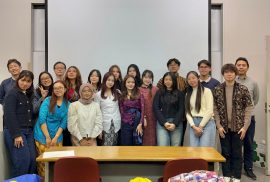
On Friday (March 21), Dr. Ir. Tri Mulyani Sunarharum, S.T., IPU., was a guest lecturer at the Development Studies Immersion Program (DSIP) held at the Department of Architecture and Planning (DTAP), UGM. This event was part of the Australian Consortium for In-Country Indonesian Studies (ACICIS), a course program for university students from Australia to gain educational experience in Indonesia.
During the program, Dr. Tri Mulyani delivered a lecture to four student delegates from the University of Queensland and the University of Sydney participating in the DSIP program. Through her presentation titled “Sustainable Development and the Environment,” Dr. Tri Mulyani discussed Indonesia’s development challenges as well as global threats such as climate change and natural disasters. She emphasized the importance of development policies contributing to poverty alleviation (SDG 1), sustainable and disaster-resilient urban planning (SDG 11), and integrated climate change mitigation strategies across various sectors (SDG 13).
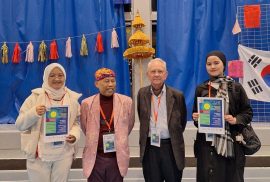
Paris and Le Havre, France — From March 5 to 7, 2025, the international conference “The Rise of Asia” took place, commemorating the 70th anniversary of the 1955 Asian-African Conference and continuing the Bandung Spirit Movement. Day one was held in Paris, followed by sessions in Le Havre for the remaining two days, serving as a crucial forum for developing countries to collaborate on creating a more just, inclusive, and sustainable global future.
Since its launch in 2015, The Rise of Asia Conference has consistently emphasized solidarity, cooperation, and decolonization. This year, it reinforced its commitment to the Sustainable Development Goals (SDGs) as the foundation of global development initiatives. A key agenda was the establishment of the University of New Emerging Forces (UNEFO) in Koudougou, Burkina Faso, supporting SDG 4 (Quality Education), SDG 17 (Partnerships for the Goals), and SDGs 10 and 11 (Reducing Inequality and Building Sustainable Communities). Notably, a student from UGM’s Department of Architecture and Planning (DTAP), Bening Putri Kasandra, contributed to the library design team for UNEFO, incorporating Burkina Faso’s local values and embodying the Asia-Africa spirit.
The Great Hanshin-Awaji Earthquake in 1995 marked a turning point for Kobe City, transforming it into a center for expertise in safety management, particularly in disaster prevention and mitigation. Over the years, Kobe has become a hub for national and international organizations, institutions, researchers, and academics seeking to learn from the advanced safety management systems developed in response to the disaster.
As part of the Asian Cooperative Program (ACP), Kansai University of International Studies (KUISs) in Kobe, Japan, hosted an activity titled “The Japanese Safety Management and Japanese Culture.” This program ran from February 6 to 17, 2025, bringing together students from various ACP member universities, including Bramertha Salsabella Roseli (Mertha), a student from the Department of Architecture and Planning. The initiative aligns with several Sustainable Development Goals (SDGs), such as quality education (SDG 4), innovation in infrastructure (SDG 9), and fostering global partnerships (SDG 17).

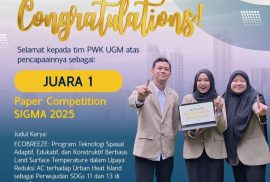
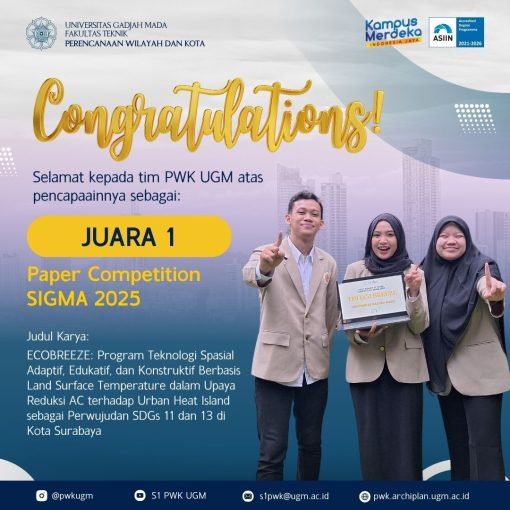
The Ecobreeze Team won 1st place in the Paper Competition SIGMA 2025, organized by the SEG & HAGI Student Chapter of Universitas Padjadjaran on February 22, 2025. The team consists of Ilkarizia Etro Candra Gabesya (KPJ 2023), Mulky Djati Sabila (KPJ 2023), and Zuhud Ahnaf Fauzi (PWK 2022).
In this competition, the Ecobreeze Team presented a scientific paper titled “ECOBREEZE: An Adaptive, Educational, and Constructive Spatial Technology Program Based on Land Surface Temperature for Reducing Air Conditioning in Urban Heat Islands as a Representation of SDGs 11 and 13 in Surabaya.” This research highlights the impact of Urban Heat Island (UHI) in urban areas and offers a Land Surface Temperature (LST)-based solution to reduce dependence on air conditioning (AC). Through this approach, their research supports the achievement of SDGs 11 (Sustainable Cities and Communities) and SDGs 13 (Climate Action).
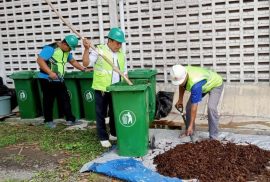
During the peak of the 79th Hari Pendidikan Tinggi Teknik (HPTT) celebration last February, the Department of Architecture and Planning (DTAP) achieved a milestone by winning third place in the Jagoan Kompos Competition. Composting organic waste, such as fallen leaves and food scraps, is a simple, practical, and eco-friendly method to support responsible waste management. It helps prevent bad odors, reduces the risk of disease, and maintains a clean and pleasant environment. Through this competition, the Faculty of Engineering aims to inspire departments to actively contribute to the Zero Garbage Campaign. This aligns perfectly with this year’s HPTT theme, ‘The Role of Engineering Science in Responding to Global Climate Change and Creating a Quality and Sustainable Environment,’ addressing SDGs 3, 11, and 13.